 EN
EN  PL
PL 


B2B Sales – What Is It and How Does It Work?


B2B sales is a precisely planned journey toward trust, value, and long-term cooperation. In a world where business clients assess risk, calculate profitability, and compare dozens of offers, success depends not only on product quality—but on how well sales professionals understand client needs, how effectively they manage the sales process, and how consistently they build lasting business relationships.
In this article, we explain not only what B2B sales is, but also how the sales process works, what the buying process looks like on the company side, and why modern approaches to reaching potential customers must be based on data, long-term thinking, and personalized offers.
What Is B2B Sales? Definition and Practical Meaning for Companies
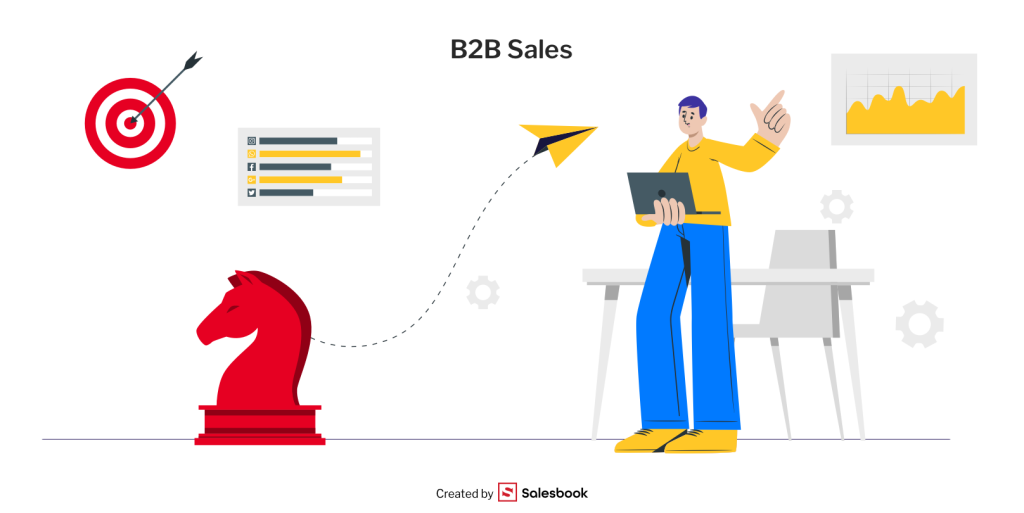
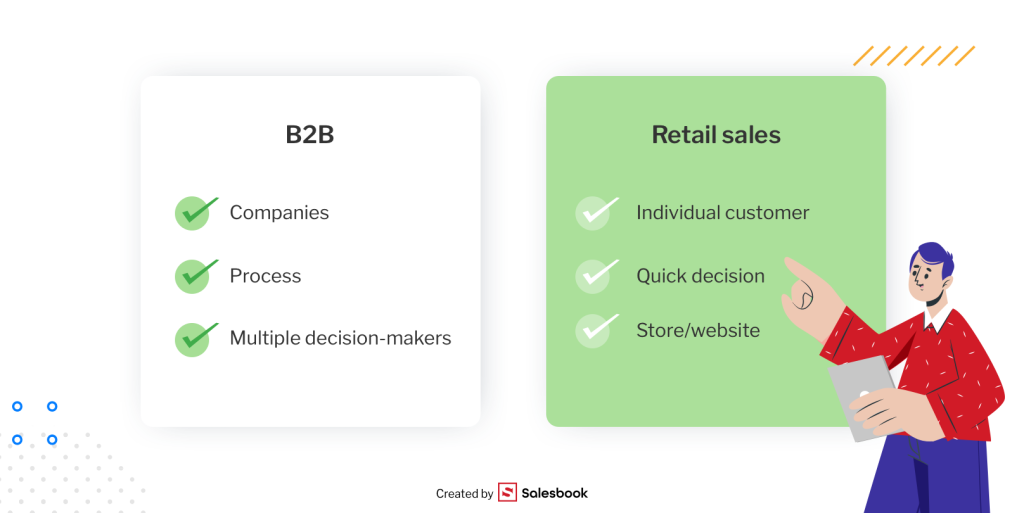
B2B sales (business to business) refers to a process in which one company provides services, products, technologies, or solutions to other businesses—not to individual consumers, as in business to consumer or consumer sales. This requires a different approach, because business buyers make decisions in a more analytical way, based on return on investment, risk assessment, and alignment with internal processes and overall sales strategy.
It is not just about closing a deal, but about understanding the customer’s business context, selecting the right target market, and delivering real value that solves problems, improves operations, or strengthens a company’s competitive position.
In practice, B2B sales focuses on building relationships grounded in trust, expertise, and deep industry knowledge. Companies choose partners they can work with for months or even years, which is why professionalism and a consistent sales cycle matter—from the first contact, through customer behavior analysis and product presentations, to contract signing and ongoing support after the sale.
Equally important is continuously identifying customer needs and evolving the offer so it responds to real challenges faced by existing clients. This is why B2B sales is not a one-time transaction, but rather the selling of solutions—based on a deep understanding of the customer’s business, operating models, and growth plans. The result is not only more customers, but also a stable base of business partners who return for additional products or expanded services.
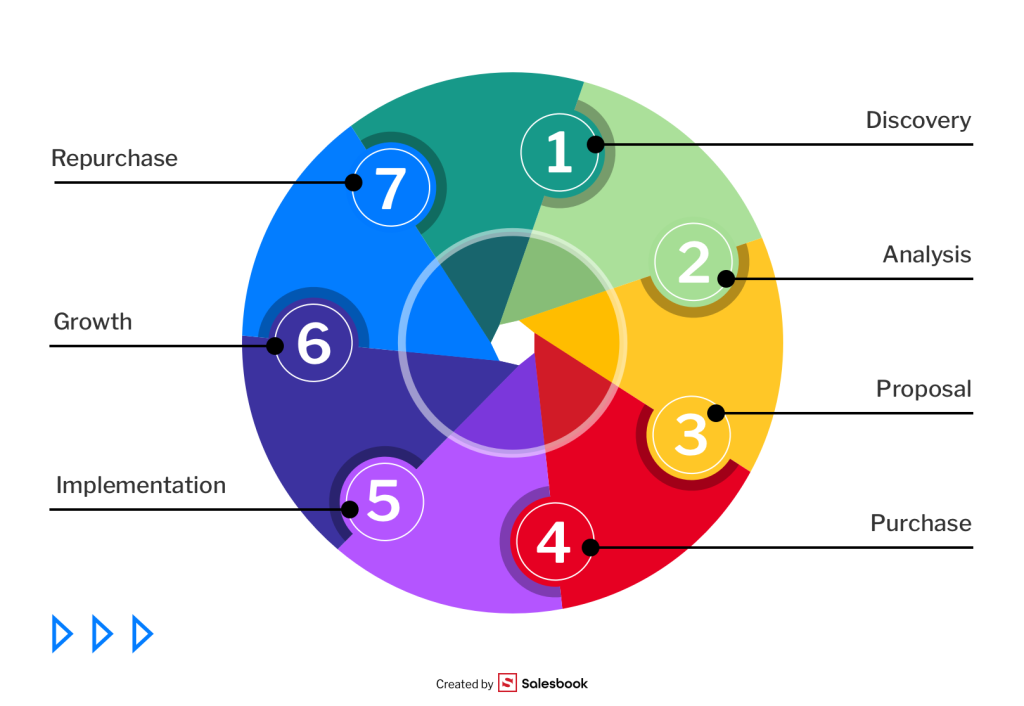
How Does the B2B Sales Process Work? Key Stages of Effective Execution
The sales process is the foundation that determines whether a company will successfully acquire new customers or lose them along the way. In B2B sales, it is not a single action, but a structured framework that includes analysis, communication, presentations, negotiations, and building trust.
Each stage requires professionalism from sales reps and alignment with marketing efforts—because marketing teams often initiate first contact, build brand awareness, and deliver qualified leads to the sales team.
Where Does the B2B Sales Process Begin?
The B2B sales process starts with a precise definition of the ideal customer profile and target customers. This is the stage where companies analyze who they are selling to, which pain points they aim to address, what type of product or service fits a given segment, and how product presentations can be tailored to the customer’s specific context. Only after this groundwork does lead generation truly begin—today largely driven by social media, online advertising, industry portals, content marketing, and well-designed sales funnels.
When sales reps make the first contact, a series of micro-interactions begins, all aimed at building relationships and trust. Sales professionals analyze the needs of potential clients, assess how an offer can solve real business challenges, and adapt communication to each role in the decision making process. This is where personalization gains importance—not as a cosmetic add-on, but as a practical tool that genuinely influences how decisions are made inside one business.

The B2B Buying Process – How Companies Make Decisions
The buying process in business to business sales resembles a multi-threaded series rather than a simple, linear story. On one side, there are customer needs; on the other, technological limitations, internal regulations, company policy, budgets—and somewhere in between: emotions, time pressure, and the risk of making the wrong choice. Gartner reports that a typical B2B purchase involves between six and ten people who must reach consensus, meaning multiple stakeholders influence the outcome.
In practice, the purchasing process starts much earlier than most sales teams notice in their customer relationship management systems. Potential customers first identify a problem, conduct market research, read industry publications, analyze their own end-customer requirements, check reviews, and sometimes even follow vendors on social media. At this stage, no one is actively selling products or selling services—the focus is on awareness and positioning the company as a credible expert. This is where marketing teams play a key role through content marketing, online ads, strategic LinkedIn activity, and proprietary webinars.
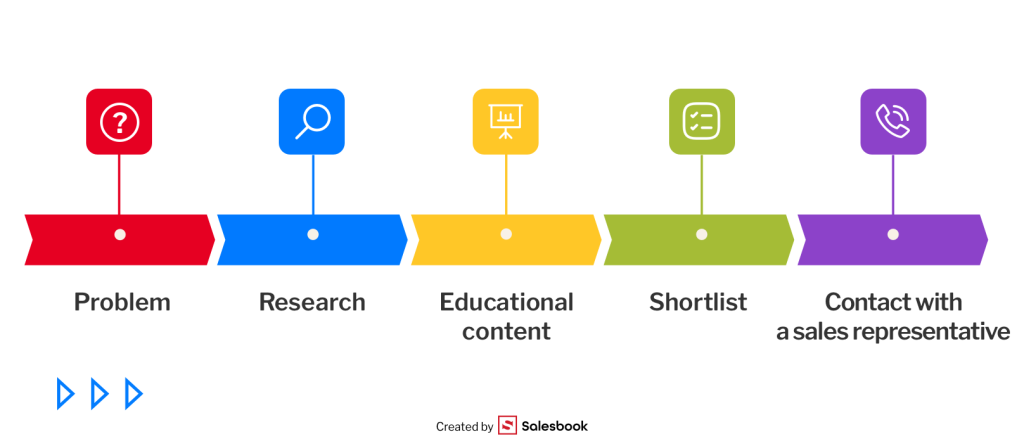
When a business buyer moves into the “shortlist” phase, the search for proof begins. This is the moment when a company needs not only a strong product, but also a clear website, professional sales pitches, well-defined target market positioning, case studies, a capable sales team, and a consistent sales process. Every detail—even the language used in a PDF—affects the final choice, as it signals quality, reliability, and organizational stability.
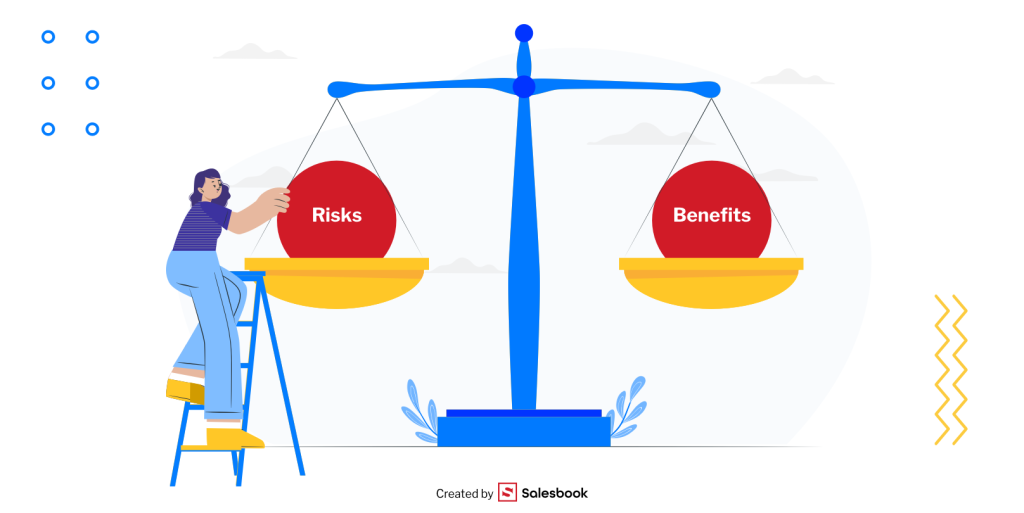
In the final stage, the buying process turns into a risk assessment exercise. Business buyers ask themselves: “Will this vendor deliver?”, “Does this solution fit our operating model?”, “What does ongoing support look like after the contract is signed?” Companies that win are those that anticipate customer expectations—often including needs the client did not articulate directly. Nobel Prize winner Daniel Kahneman described this as a cognitive advantage: we prefer partners who help us reduce decision-making complexity and bring clarity to uncertainty.
Decision Making in B2B – Who Really Influences Vendor Selection?
Decision making in B2B sales is rarely straightforward. Formally, the contract may be approved by a CFO, but real influence often comes from less visible roles: system users, operational leaders, technical specialists, or even accounting firms. In B2B sales, success belongs to companies that understand how a client’s internal decision structure truly works—and adapt communication to each group involved.
It is worth remembering that business decisions are never purely rational. Yes, decision makers analyze ROI, security, and sales metrics, but at the same time they evaluate the behavior of sales reps, response times, consistency of materials, relationship-building skills, and the overall impression created by the organization. Kahneman described this as the tension between fast and slow thinking: instinct versus analysis, with the final choice being a compromise between both.
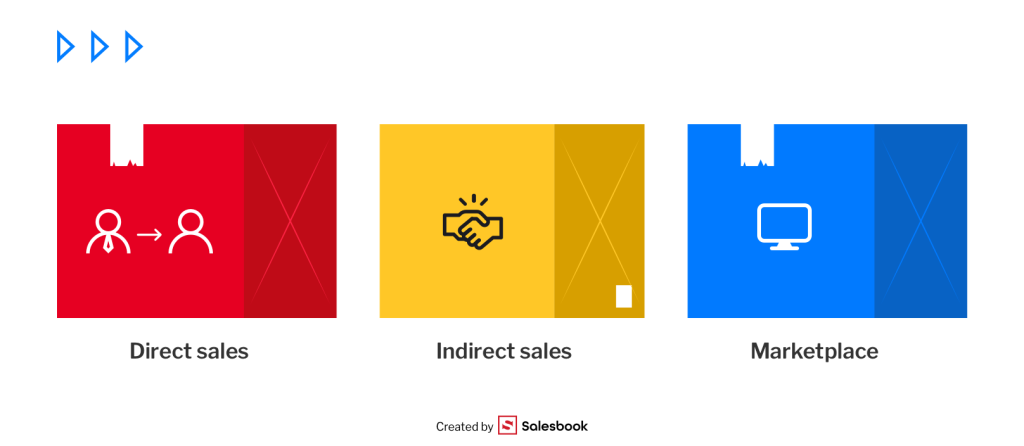
The decision making process is also shaped by the sales model a company uses—direct sales, indirect channels, or marketplace-based distribution. Each model triggers different concerns, such as distributor stability, post-sale service quality, partner credibility, or technology risk. This is why sales professionals must understand not only customer needs, but the entire organizational structure of the client.
In B2B, the winners are often not the companies with the theoretically “better” product, but those that make decisions easier for the buyer. Clear processes, concrete materials, logical next steps, and the absence of informational chaos can shorten the sales journey dramatically. That is why top sales leaders focus not only on the offer itself, but on the full context in which that offer is evaluated.
B2B Customer Acquisition – Effective Strategies and Growth Channels
Customer acquisition in B2B is not a one-time action, but a sequence of well-planned steps that begin long before a sales rep makes first contact with potential clients. First, a company must reach the right customer segment—those that have a real problem, the budget to solve it, and a genuine need for change. Marketing activities play a crucial role here: expert articles, educational content, presence on industry portals, and consistent communication on social media, which today is one of the primary sources of B2B traffic. It is often in these channels that a business buyer encounters a brand for the first time and begins to follow its activity.
In practice, customer acquisition is built on a combination of digital efforts and direct interactions. Online advertising helps build brand awareness and drives traffic to educational content, content marketing establishes an expert context, and the sales team is responsible for taking over the lead and guiding it through the sales process. At the same time, analyzing customer behavior is becoming increasingly important—sales professionals use data to understand which content generates the most interest, which pain points are searched for most often, and when it makes sense to initiate first contact.
A key element of acquiring new customers is also a well-designed product presentation. Companies that communicate clearly, visually, and concretely gain an advantage over those that rely on generic PDFs. A business client expects communication tailored to their specific situation, type of product, company size, and decision context. That is why sales reps must think not only about the message itself, but also about building relationships that lead to long-term cooperation.
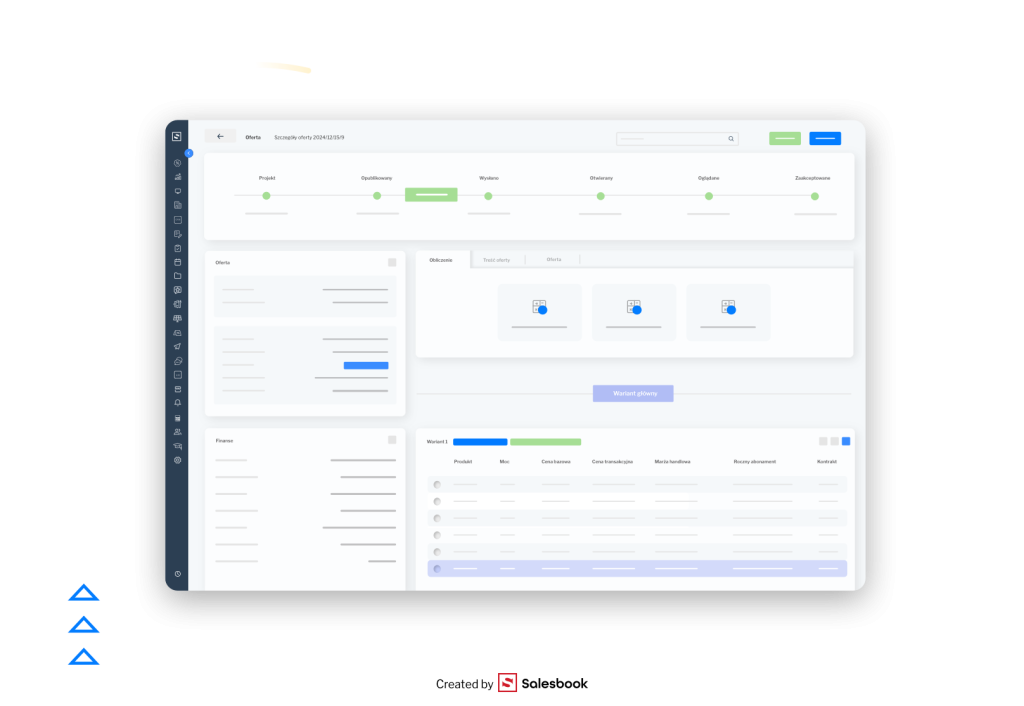
Customer Needs Analysis – The Foundation of Effective B2B Sales
Customer needs analysis is the most important stage of the entire sales process—and paradoxically, it is also the one most often skipped. A sales professional who enters a conversation with a ready-made offer, rather than a readiness to ask questions, is already at a disadvantage. In B2B sales, success depends on the ability to understand how the customer’s organization operates, what challenges it faces, how decisions are made, and what the company expects from a vendor. This is the point where transactional selling diverges from solution selling—because the focus is not on the product itself, but on aligning it with the real challenges of the business customer.
What Does a Good Customer Needs Analysis Look Like?
A strong analysis combines industry knowledge, listening skills, and intuition. The best sales reps act a bit like researchers—they examine the client’s organization from multiple angles, ask probing questions, analyze the needs of end customers, verify how the current process works, and identify what is holding growth back. Only after this stage can they responsibly personalize the offer. The result? The client feels genuinely understood, rather than feeling that someone simply swapped a logo on a slide deck.
Modern needs analysis no longer relies solely on conversation—it also includes data. Sales tools make it possible to track which content a client reviews, what materials they search for, where they spend the most time, and which challenges they raise during meetings. This allows sales professionals to act based on facts rather than intuition. As a result, the sales cycle becomes shorter, trust is built more effectively, and the likelihood increases that the customer will not only buy, but remain a long-term client.
Offer Personalization – Why Do Customers Expect Tailored Solutions?
Offer personalization is no longer a “nice-to-have.” In B2B, it has become one of the key factors influencing purchasing decisions. Business buyers want to feel that they are not speaking with just another vendor, but with a partner who understands their processes, challenges, and end-customer context. A well-designed offer demonstrates that the sales professional not only understands customer needs, but can translate them into concrete solutions and measurable outcomes.
In practice, offer personalization begins long before the first version of a document is created. It includes data analysis, problem identification, conversations with users, and an understanding of where the business customer’s organization currently stands. This is why companies invest in tools that enable the creation of dynamic product presentations tailored to the client profile, industry, type of product, or number of employees. An offer cannot be universal—it must reflect the customer’s reality.
Customers make decisions faster when they see that an offer aligns with their own operational processes. The psychological reason is simple: the more something resembles our own reality, the less cognitive effort it takes to evaluate it. That is why sales reps who tailor features, use cases, and materials to specific roles in the decision-making process achieve better results, build stronger business relationships, and shorten the overall sales process.
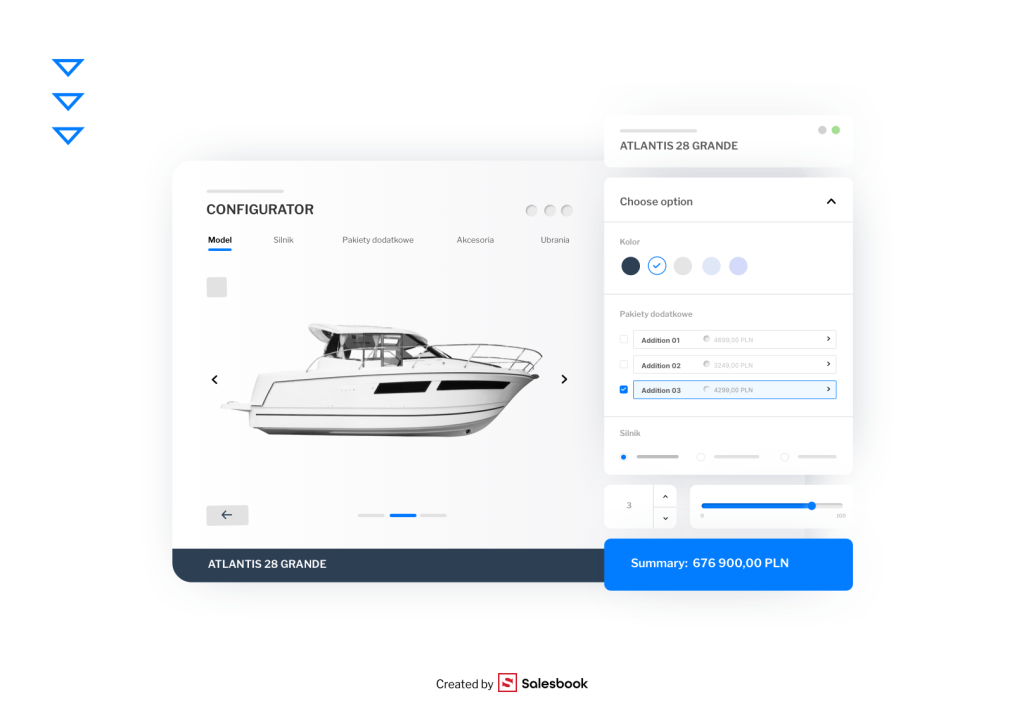
Building Relationships in B2B Sales – What Really Works?
Building relationships in B2B sales increasingly distinguishes companies that achieve long-term cooperation from those that only close one-off deals. Business buyers want partners, not just vendors—people who understand their sales strategy, respond to change, anticipate risk, and support decision makers throughout the decision making process. In a world where anyone can send an email or prepare an offer, the quality of the relationship ultimately determines who earns trust for years.
In practice, relationships are built not “over coffee,” but through everyday interactions: fast responses, well-prepared materials, clear next steps in the sales process, a willingness to help, and proactivity. These seemingly small details decide whether a customer sees a supplier as a partner or just one of many other businesses on the market. In well-functioning organizations, sales and marketing teams work closely together to build trust—from the first piece of content to product implementation.
Data plays an increasingly important role as well. Companies that analyze customer behavior know how to tailor communication, which content to share, when to reach out to potential clients, and when to move from operational discussions to strategic ones. The relationship does not end after the sale—on the contrary, it truly begins when the supplier proves their value. This is often when a customer gradually becomes a long-term client and cooperation develops naturally.
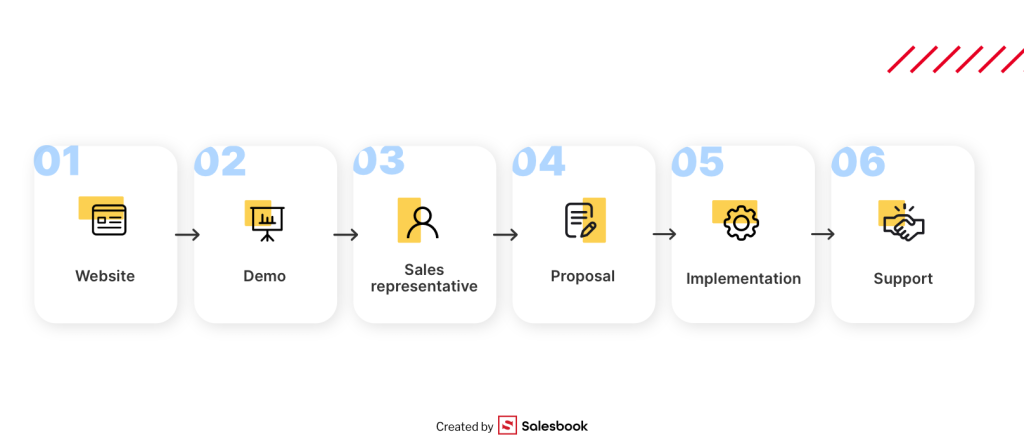
B2B Sales Models – Direct, Indirect, and Marketplace Approaches
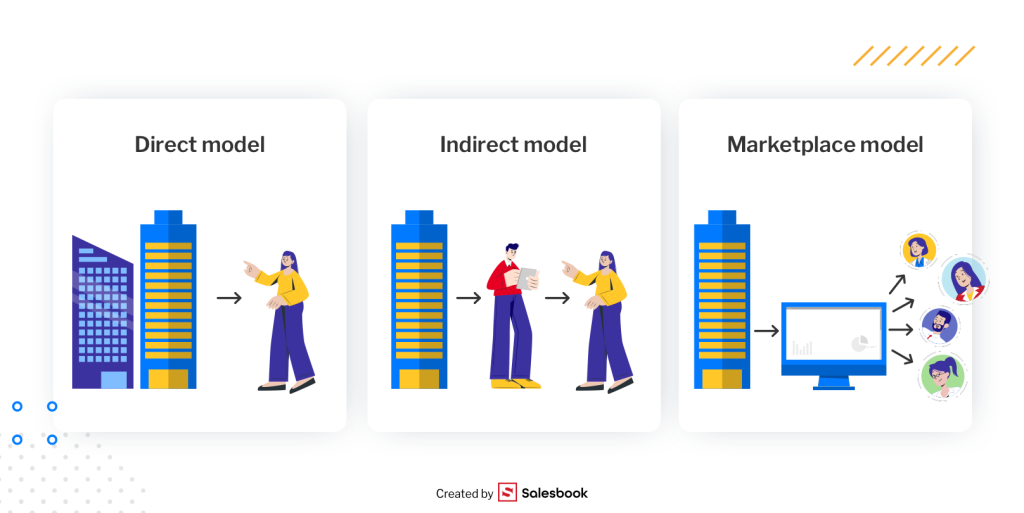
In B2B sales, the choice of a sales model affects not only how companies reach customers, but also the level of control over building relationships, operational costs, and growth strategy. The direct model, indirect model, and marketplace model are the three main approaches companies adapt to their target market, type of product, scale of operations, and expected margins. Each requires a different sales strategy and different capabilities within the sales team.
The direct model is most often chosen by companies that want full control over the sales process, service quality, and long-term cooperation. Sales reps work directly with the business customer, allowing for precise communication, in-depth needs analysis, and strong offer personalization. This model is ideal for selling services or solutions that require implementation or technical consulting.
The indirect model is based on cooperation with distributors, resellers, or integrators. It enables rapid scaling of potential customers without expanding the internal sales team. However, it offers less control over product presentations, the buying process, and customer satisfaction. Companies must ensure consistent messaging and ongoing education of partners so that their support truly enhances sales performance.
The marketplace model has gained popularity alongside the growth of B2B platforms, industry portals, auction sites, and commodity exchanges. While often associated with consumer sales, in practice it offers strong opportunities to reach new customers, test offers, and quickly scale visibility. This model is particularly attractive for technology companies that want to be present where key decision makers actively compare vendors and solutions.
The Most Common B2B Sales Mistakes—and How to Avoid Them
The most common mistakes in B2B sales usually stem not from a lack of skills, but from a lack of consistency and repeatable processes.
Lack of Customer Needs Analysis
One of the most frequent issues is skipping proper customer needs analysis. Sales professionals move too quickly to presentations, bypassing the critical stage of understanding the business context. As a result, the offer does not reflect the customer’s reality or purchasing process, causing potential customers to disengage early.
Lack of Consistency
Another major mistake is inconsistency between marketing efforts and sales activities. If content marketing says one thing, online ads another, and sales reps present the offer differently, trust disappears within seconds. Business buyers expect stability, predictability, and a clear sales journey. Informational chaos increases perceived risk in vendor selection.
Poor Lead Management
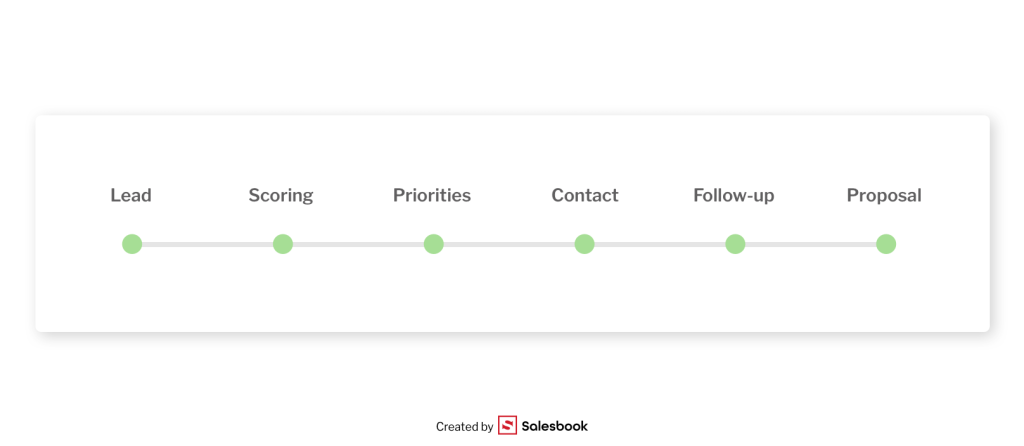
A third mistake is ineffective lead management: no prioritization, communication not aligned with the customer profile, ignoring user behavior, and delayed follow-ups. Companies that fail to analyze sales data do not know when a business buyer is ready to move forward. McKinsey research shows that data-driven organizations with repeatable sales processes can achieve up to 50% higher conversion rates.
Short-Term Thinking
The final—and very common—mistake is a lack of long-term thinking. B2B sales is not about quick wins, but about building relationships based on trust. Treating a customer as a one-time opportunity instead of a long-term partner blocks sustainable growth. Ongoing support, post-sale engagement, and proactive communication are what turn clients into advocates—and recommendations from business customers are often more valuable than any advertising.
Key Takeaways
B2B sales today goes far beyond product presentations and price negotiations. It is a data-driven, relationship-focused selling process built on trust and a deep understanding of customer needs. Companies that analyze needs effectively, personalize offers, choose the right sales model, and avoid common mistakes build a competitive advantage that is difficult to replicate. Where there are longer sales cycles, multiple stakeholders, and many touchpoints with potential clients, modern sales tools and sales software become a necessity rather than a luxury.
If you want to organize your sales process, improve offer quality, and increase sales success, see how Salesbook works and schedule a free demo.
FAQ – Frequently Asked Questions About B2B Sales
1. What is B2B sales and how does it differ from retail sales?
B2B sales involves transactions between one business and other businesses. It usually includes longer sales cycles, a more complicated B2B sales process, and multiple stakeholders. Unlike consumer sales, decisions are based on business logic, ROI, and organizational priorities rather than emotional impulses of individual consumers.
2. How do I choose the right B2B sales model for my company?
The choice depends on your target customers and whether you are selling products or selling services. A direct model offers maximum control and supports building relationships. An indirect model relies on partners to scale reach. A marketplace model enables faster access to new customers through industry platforms.
3. Which marketing activities best support B2B customer acquisition?
The strongest results come from combining content marketing, online advertising, social media activity, and expert publications. These channels attract prospective clients early in the B2B sales funnel, build awareness, and support lead generation before direct sales engagement.
4. How can companies reduce friction in the customer’s decision making process?
By simplifying the B2B sales process: clear communication, transparent materials, logical steps, focused sales pitches, and alignment with the customer profile. The goal is to remove unnecessary complexity and focus on solving real pain points.
5. Why is customer needs analysis critical in B2B sales?
Understanding customer needs reveals real challenges, business context, and the purchasing process. This enables effective offer personalization, supports building relationships, increases customer loyalty, and significantly improves the chances of long-term cooperation.
6. How should B2B companies structure their sales efforts and sales plan to improve results?
Effective sales efforts in business to business environments require a clearly defined sales plan aligned with overall sales goals and sales targets. Because B2B often involves a complicated sales process, companies must track key performance indicators such as pipeline value, close deals ratio, annual contract value, and conversion rates at each stage. Successful revenue teams align sales tactics with marketing tactics, market trends, and price sensitivity within the target market. This approach helps ensure that business sells are predictable, measurable, and scalable—especially when selling services directly to other businesses rather than individual customers.
7. What sales tactics work best when dealing with long and complex B2B buying structures?
In B2B, especially when working with consulting firms, account based sales models, or sectors called business to government, traditional cold calling alone is rarely sufficient. Instead, companies combine inside and outside sales with social selling, targeted outreach, and qualifying leads based on real buying intent. Because B2B buyers often evaluate suppliers across raw materials, services, and long-term contracts, sales tactics must support multiple touchpoints and stakeholders. A structured approach allows sales professionals to close deals more effectively while adapting communication to different decision-makers involved in the process.
8. How do marketing and sales teams collaborate to improve B2B performance and revenue outcomes?
High-performing B2B organizations rely on tight collaboration between marketing teams, sales teams, and revenue teams. Marketing supports sales by generating demand, supporting qualifying leads, and aligning messaging with current market trends, while sales focuses on execution and relationship-building. Together, they analyze data such as sales targets, customer behavior, and price sensitivity to refine outreach. This alignment ensures that business to business sales efforts remain consistent, data-driven, and focused on delivering value to other businesses throughout the entire sales cycle.
Table of Contents