 EN
EN  PL
PL 


Sales Performance: What It Is and How to Improve It


Sales performance is one of the most important indicators of a company’s health. It reflects not only how much the organization sells, but also how effectively it reaches potential buyers and converts them into loyal customers. Many sales managers wonder how to improve sales performance and which actions actually influence revenue growth – both in the short and long term.
In this article, you’ll find practical ways to increase sales, examples of techniques that help boost sales team performance, and proven practices for analyzing sales performance data. We’ll break down how to attract potential customers, which tools support sales reps on a daily basis, and how to build a sales process that consistently improves outcomes at every stage of the sales cycle.
Sales Results vs. Sales Performance — What Exactly Are We Measuring?
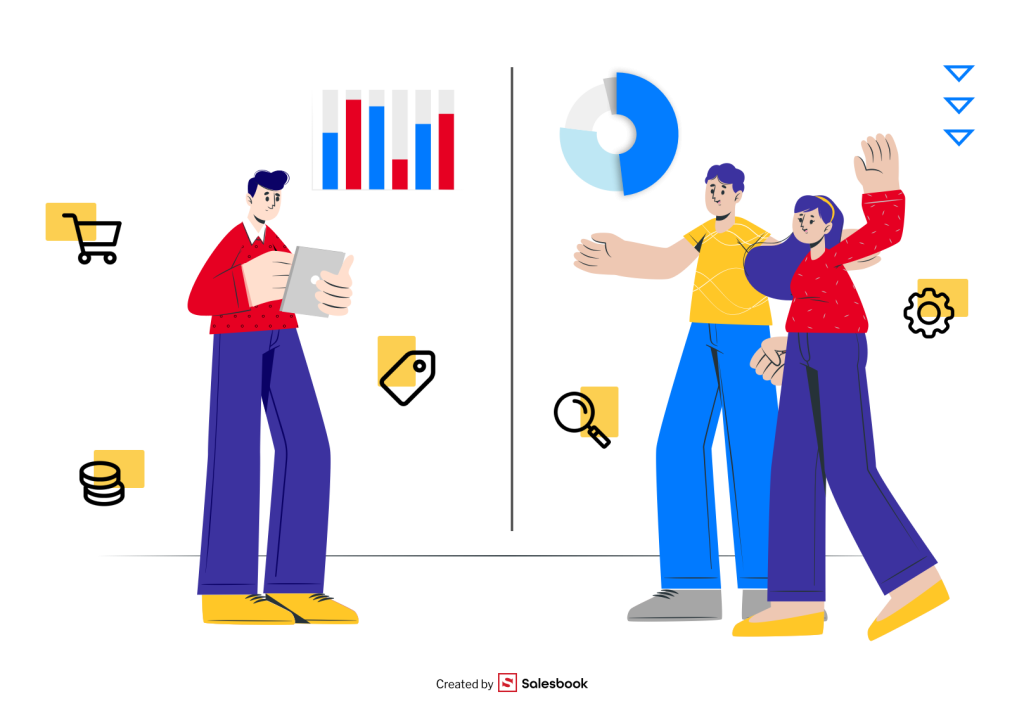
Although in everyday conversation the terms “sales results” and “sales performance” are often used interchangeably, in practice they mean two different things.
Sales results are hard numbers – the number of products sold, the revenue generated within a specific period, or the number of new customers who decided to make a purchase.
Sales performance, on the other hand, is more analytical and strategic. It includes sales metrics such as lead-to-customer conversion rates, the effectiveness of product presentations within a target audience, and the overall efficiency of the sales process across the entire funnel.
It’s important to emphasize that to measure sales performance is not just to look at a financial report. It’s an evaluation of whether the actions taken by sales reps and the marketing team truly improve the sales process and increase productivity across the sales organization. Research from Salesforce shows that 66% of buyers expect companies to understand their needs and preferences during the purchasing journey. Because of this, sales performance metrics function as a barometer – showing whether a company is delivering value that aligns with customer expectations.
For example, analyzing user behavior on a website or product page helps teams answer crucial questions:
- Which content captures the most attention?
- At which step does the sales cycle stall?
- Which presentation methods work best?
Insights like these allow organizations not only to improve results but also to strengthen customer satisfaction and significantly enhance overall sales performance.
To support long-term growth, many companies build a dedicated sales performance management strategy, often supported by sales performance management software, which helps sales managers streamline processes, monitor key performance indicators, and manage the sales team more effectively. When applied consistently, these sales strategies create a structure that empowers sales reps and helps the entire organization improve sales performance based on real data rather than assumptions.

Why Sales Performance Is Critical to a Company’s Growth
Sales performance is not just a “report of how many products were sold.” It’s a compass-one that shows where the company should direct its efforts and which parts of the sales process need improvement to support long-term growth. Without consistently monitoring sales performance metrics, even the most impressive marketing strategy or the most creative website content won’t translate into real increases in revenue.
It’s worth noting that sales performance influences several fundamental areas:
Customer development
Strong performance signals that the company is not only attracting new buyers but also retaining existing ones through proper engagement and service. High customer satisfaction is a direct reflection of that.
Process optimization
Analyzing sales performance data reveals which stages require improvement.
Is the bottleneck in prospecting, or does the drop-off occur at the final step of the sales cycle?
Investments and strategic decisions
Companies build product roadmaps, expansion plans, and scaling strategies based directly on sales performance. Well-managed organizations often rely on structured sales performance management to guide these decisions.
According to HubSpot, 72% of companies that regularly analyze their sales performance achieve stronger year-over-year revenue growth (source: https://research.hubspot.com). This shows that success isn’t only about tracking how much was sold – it’s about learning from the data and applying sales strategies that help improve sales performance in the future.
Because of this, sales performance becomes not only a historical KPI but also a foundation for predicting future results. It shows whether customer-facing activities – from the website to direct communication – align with real buyer expectations. When the sales team doesn’t analyze its performance or look for ways to improve, the organization risks stagnation. But when performance is monitored consistently, sales managers can increase efficiency, unlock more of the sales team’s potential, and respond faster to market shifts.
A structured approach – often supported by sales performance management software – helps sales managers and leaders measure sales performance accurately and make decisions based on real key performance indicators rather than assumptions. This is how organizations strengthen both sales results and overall sales team performance across the entire sales organization.
How to Attract Potential Customers to Improve Sales Performance
Attracting potential customers today is no longer just about cold calling and standard product demos. It’s an art form – a blend of psychology, technology, and a touch of pop culture. Just think of the iconic scene from the 1992 film Glengarry Glen Ross, where Alec Baldwin, playing a ruthless sales leader, repeats the mantra “Always Be Closing.”
But that old-school, maximalist approach to selling at any cost belongs to the past. Modern sales leaders focus on subtlety, understanding customer needs, and building relationships that not only increase revenue but also sustainably drive sales performance over time.
Neurobiology and Sales
One surprisingly powerful way to boost sales performance comes from neurobiology. Research published in the Journal of Neuroscience shows that purchasing decisions are often made not in the rational part of the brain, but in areas responsible for emotion and reward. In other words – customers rarely buy because a product is the cheapest or the most functional. They buy because a brand triggers emotions that activate the brain’s reward system.
This is why companies that embrace storytelling and create strong narratives on their websites often attract more sales opportunities. It’s no coincidence that Apple doesn’t sell “a smartphone with a good camera,” but rather “a tool for creating everyday art.”
Mathematics and Predicting Sales Opportunities
There’s also a more analytical dimension – the mathematical one. Daniel Kahneman, Nobel laureate and author of Thinking, Fast and Slow, demonstrated that people tend to overestimate their chances in random events but underestimate how predictable behavior becomes when backed by customer data.
Applied to the world of sales operations, this means that if a company analyzes website activity and customer interactions carefully, it can accurately predict who is closest to making a purchase.
This is why lead scoring has become essential. Algorithms evaluate whether someone visited the website multiple times, what content they consumed, and whether they downloaded marketing materials. These sales performance metrics help sales reps focus their sales efforts where the probability of conversion is highest – directly improving sales efficiency.
Ancient Wisdom and Modern Sales Practices
Even Aristotle wrote in Rhetoric that persuasive communication rests on three pillars: ethos (credibility), logos (logic), and pathos (emotion). This framework is surprisingly close to the structure of a modern sales enablement approach:
- Ethos – trust in the brand and the sales rep, built through transparency and testimonials from existing customers.
- Logos – clear performance data and evidence (ROI, case studies, research confirming product effectiveness).
- Pathos – emotional storytelling that makes customers feel part of the product narrative.
A sales rep who leverages all three elements can not only attract new and existing customers, but also markedly improve their sales rep’s performance and support broader sales goals.
An Extraordinary Example From NASA
A great example comes from far outside the typical business world. During the Apollo program, NASA’s biggest challenge wasn’t building the rocket – it was convincing the public and Congress to fund the mission. The space agency realized that logic and technical data alone wouldn’t work. So they began communicating successes in simple, emotionally resonant ways: live broadcasts, astronaut stories, and heroic imagery. It was selling at a massive scale – and it worked. Public and political support increased significantly.
Business works the same way. Even the best product and the most accurate performance data won’t be enough if they aren’t presented in the right way. Sales is not only about numbers – it’s a process in which science, emotion, and culture converge to help organizations meet revenue targets, shorten sales cycle length, and support healthy monthly sales growth.
Effective sales performance management helps companies align these elements in a structured, repeatable way. By tracking sales performance with a dedicated sales performance dashboard and structured sales performance management processes, organizations can understand market trends, support better sales activities, and ensure that sales and marketing efforts move in the same direction.
When all of this comes together, sales performance management becomes important not as a formality, but as a growth engine – one that allows teams to hit their sales targets, improve customer retention, and strengthen overall sales revenue.

5 Ways to Increase Sales in a Sales Rep’s Daily Work
Sales performance doesn’t improve on its own – it requires consistent, intentional sales activities that meaningfully influence conversion rates and the quality of customer conversations. Below are five practical strategies that help sales professionals and managers make better use of their potential and align the sales process with the realities of today’s market.
1. Understand What Truly Drives the Customer
Across many industries, purchase decisions are no longer based solely on price or product specifications. Customers increasingly care about the values a brand represents. A study by Havas Group found that 77% of consumers choose companies aligned with their personal values.
This means sales professionals must clearly articulate what makes their brand unique and why it deserves trust – a key element of good sales performance.
2. Shorten the Path to Conversion
Time is money – literally – in sales. If the buying process is too complicated, conversions drop sharply.
This is why sales leaders should regularly analyze customer touchpoints, from first contact to purchase:
- Can a customer sign documents online quickly?
- Are marketing materials easy to access?
- Is product information clear and visible on the website?
The fewer barriers customers face, the higher the conversion rate. This is one of the most important sales metrics when companies measure performance and monitor sales KPIs.
3. Invest in Training and Tools for the Sales Team
In practice, sales results often depend on what sales reps bring to customer meetings. Companies that invest in modern sales tools, CRM systems, and automation tools gain more than just better reporting – they unlock real improvements in sales productivity and overall team performance.
Tools that show performance data in real time allow individual sales reps to react faster to market signals and adapt the offer to customer expectations. This is also why strong sales training and well-designed sales incentives remain essential parts of effective sales plans.
4. Optimize Online Brand Visibility
Before a customer ever speaks with a sales rep, they almost always research the brand online. If they can’t find relevant information – or encounter chaos – the sales cycle may end before it even begins.
This is why close collaboration between sales and marketing teams is critical.
When digital content is aligned with customer expectations and easy to navigate, lead generation becomes more effective, helping the sales force reach more new customers and improve customer acquisition outcomes. In B2B especially, strong online visibility directly influences total revenue generated and long-term recurring revenue.
5. Personalize and Monitor – Because Details Matter
Customer data is a goldmine – the question is whether teams know how to use it. Sales reps should personalize offers based on previous interactions and analyze which offer elements lead to higher conversion.
Even a small adjustment – for example, highlighting how the product solves a specific customer problem – can accelerate decision-making and improve rep performance.
Monitoring customer feedback, understanding customer lifetime value, and staying close to the needs of both new customers and existing customers helps teams improve net revenue retention and customer success outcomes.
When managers provide constructive feedback and regularly review key metrics, sales ops can boost productivity across territories and support stronger, more predictable team performance.

How to Improve Sales Performance with Digital Tools and CRM
Digital tools make it possible not only to monitor sales performance but also to meaningfully improve it. A CRM system has become the command center of modern sales ops – collecting customer data, automating workflows, and supporting conversion analysis. This gives sales reps the ability to react faster to market signals and personalize offers more effectively, leading to more satisfied customers and stronger customer acquisition outcomes.
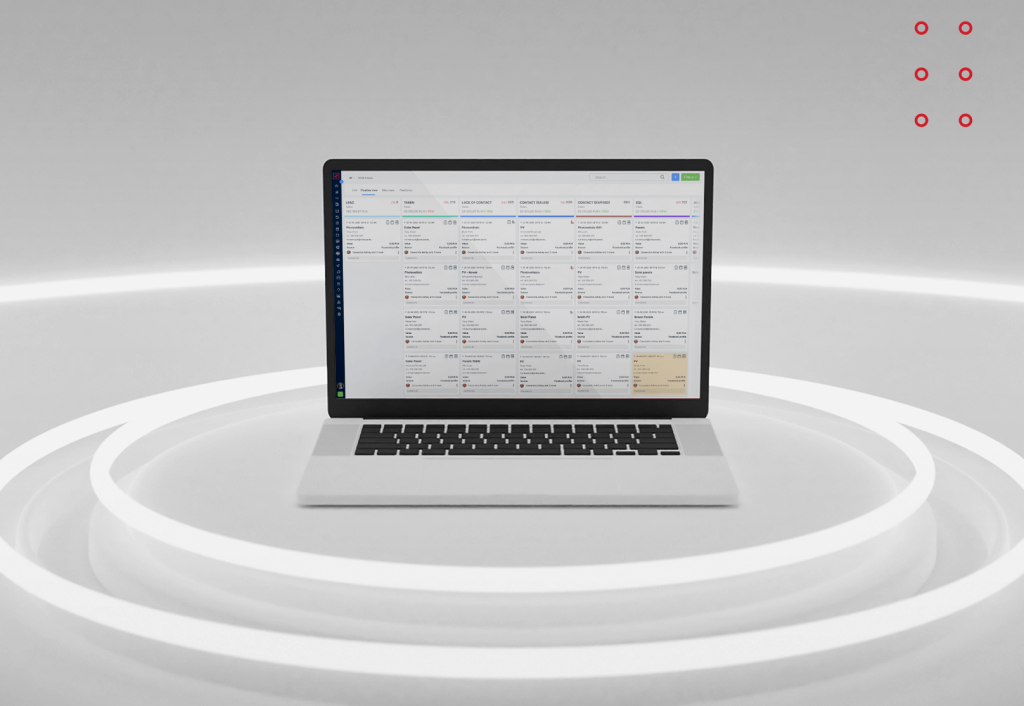
Solutions like Salesbook take this a step further: they combine CRM with a mobile sales app that allows reps to run presentations, build offers, and start closing deals directly during a customer meeting. The result? A shorter sales cycle and higher effectiveness in day-to-day work across different sales territories.
That’s precisely why sales performance management important isn’t just a phrase – with the right tools in place, companies strengthen both operational efficiency and long-term sales outcomes.
Your Website and Sales Performance — How to Support Sales Reps Online
A company’s website is often the very first point of contact between the brand and potential customers, which makes it a critical part of the sales process. A well-designed site simplifies lead generation, supports marketing efforts, and directly influences overall sales performance.
To be effective, the website must offer clear content, a simple buying path, and CTAs that guide potential customers toward a conversation with a sales rep. Increasingly, sales teams rely on website analytics – such as which pages or resources customers viewed – to prepare more effectively for meetings. It’s a simple yet powerful way to increase the chances of conversion and strengthen the sales outcome.

Summary – How to Improve Results and Continually Grow Sales
Improving sales performance is a process that requires consistency. Three elements matter most:
- Analysis – tracking key indicators to understand which actions generate real results.
- Tools – CRM systems and sales applications that automate workflows and increase the effectiveness of sales reps.
- The Customer – understanding their needs and tailoring communication both offline and online.
It’s important to remember that sales don’t end with numbers. Long-term success comes from relationships, values, and the customer experience. That’s why the best sales teams are constantly refining their processes, leveraging technology, and evolving alongside the market.
Table of Contents