 EN
EN  PL
PL  DE
DE 


AI CRM – Artificial Intelligence in CRM Systems


CRM is no longer just a place to “store contacts.” In an era of massive data flows, omnichannel communication, and rising customer expectations, traditional CRM systems are increasingly falling short—not because they were poorly designed, but because they can’t keep up with the scale and speed of modern customer interactions.
AI CRM is the answer to that challenge. It combines traditional customer relationship management platforms with advanced AI technology, allowing companies not only to collect customer data, but also to analyze customer behavior, forecast customer behavior, and support sales teams in making smarter, faster decisions.
This isn’t about futuristic promises. It’s about systems that already process CRM data in real time—analyzing purchase history, demographic details, emails, call transcripts, and social media activity—and turning that into measurable business value through predictive analytics, data analysis, and actionable insights.
What Is AI CRM and How Is It Different from Traditional CRM Systems?
An AI powered CRM (often referred to as AI CRM software or AI based CRM) is a customer relationship management system where key processes rely on artificial intelligence, rather than manual data entry and static rules.
Traditional CRM software typically:
- Records customer data
- Organizes contact history
- Supports basic sales processes and marketing campaigns
- Relies heavily on manual updates and predefined workflows
But it doesn’t truly understand context. It doesn’t learn from patterns in business data. And it doesn’t generate predictive insights.
An AI powered CRM system goes much further. It uses:
- Machine learning to detect patterns in large volumes of CRM data
- Natural language processing for analyzing customer interactions, emails, and customer inquiries
- Intelligent algorithms to analyze historical data and forecast customer behavior
The difference is fundamental:
| Traditional CRM | AI Powered CRM |
|---|---|
| Data as an archive | Data as a source of intelligence |
| Reactive actions | Predictive, proactive actions |
| Manual data analysis | Automated data analysis |
| Repetitive tasks | AI powered automation and automated workflows |
| Static reports | Real-time, actionable insights |
In practice, this means an AI CRM system:
- Analyzes customer behavior instead of just recording it
- Supports automated workflows across sales and support
- Enables scalable customer relationships without losing personalization
- Helps automate routine tasks like data entry and lead qualification
Instead of being a passive database, an AI powered CRM becomes an intelligent engine embedded in your CRM platform, actively supporting business processes and improving sales performance.
Why Artificial Intelligence Became Essential in Customer Relationship Management
The reason is simple: the complexity of customer relationships has exceeded what humans can manage manually.
According to the Stanford AI Index Report 2024, the volume of data generated through customer communications—emails, chats, website forms, social media messages—continues to grow exponentially. At the same time, expectations for personalized, timely and relevant communication have never been higher.
Three major forces have made AI CRM systems a necessity rather than an optional upgrade:
1. Customer Behavior Is Dynamic and Omnichannel
Today’s buyers:
- Switch channels constantly (website, phone, email, social media)
- Expect seamless customer experiences
- Make faster decisions based on real-time information
Modern AI powered tools can connect all those touchpoints into one unified customer profile. By analyzing customer interactions across channels and integrating external data, they build a coherent view of customer behavior.
This allows companies to:
- Improve customer engagement
- Anticipate customer expectations
- Deliver consistent, personalized customer communications
- Support marketing campaigns with data driven decision making
An AI powered CRM system doesn’t just log interactions. It interprets them. It can detect sentiment through sentiment analysis, recognize buying signals, and provide predictive insights to sales reps before a deal stalls.
That shift—from recording history to predicting outcomes—is what defines the evolution from traditional CRM solutions to intelligent, AI powered CRM software.

2. The Scale of Data Exceeds Human Capacity
Research published by IEEE indicates that manual analysis of customer data becomes inefficient even at a mid-sized organizational level. As companies grow, the volume of CRM data, sales data, and multichannel customer interactions quickly overwhelms sales teams and support staff.
This is where AI CRM systems make a measurable difference.
With advanced AI capabilities, AI can process large datasets faster and more accurately than humans—without cognitive bias, fatigue, or inconsistent interpretation. An AI powered CRM continuously analyzes customer data, detects anomalies, and generates predictive insights that would be nearly impossible to uncover manually.
Instead of drowning in spreadsheets and static dashboards, organizations can rely on AI powered tools to provide actionable insights in real time.
3. Automation Is No Longer Optional — It’s a Profitability Requirement
Operational efficiency has become a defining factor in competitive B2B markets. According to the OECD, AI-driven automation is one of the key drivers of productivity growth in service industries.
Modern AI powered CRM software enables companies to:
- Automate tasks related to administrative work
- Automate routine tasks in customer service
- Implement automated workflows across CRM processes
- Support sales teams without increasing headcount
Through AI powered automation, companies can streamline business processes and reduce friction in lead management, follow-ups, and pipeline tracking.
For example:
- AI agents can respond to basic customer inquiries
- AI powered chatbots can handle first-line communication 24/7
- AI assistant modules can support scheduling, reminders, and follow-ups
- Automated workflows can route leads automatically based on AI driven lead scoring
This level of automation doesn’t replace human expertise. It enhances it. Sales reps spend less time on repetitive data entry and more time building meaningful customer relationships.
4. Better Decisions Create Competitive Advantage
An AI based CRM system supports smarter decision-making because it replaces guesswork with structured data analysis.
Instead of relying on intuition, companies can:
- Analyze historical data to detect long-term patterns
- Use predictive analytics to support sales forecasting
- Monitor real-time changes in customer behavior
- Strengthen customer relationships based on actual needs
An AI powered CRM system provides business intelligence directly inside the CRM platform. It helps organizations move toward true data driven decision making by combining business data, external data, and CRM data into a single, coherent decision framework.
The result? More accurate sales forecasting, improved sales performance, and higher customer satisfaction.
How Artificial Intelligence Works Inside CRM — From Data to Decisions
Artificial intelligence in CRM systems doesn’t operate magically. Its effectiveness comes from a structured sequence of steps where raw customer data is transformed into meaningful recommendations.
This process can be simplified into four stages:
1. Data Collection
An AI CRM software platform gathers customer data from multiple sources:
- CRM platform records
- Website behavioral tracking
- Emails and customer communications
- Sales systems and sales pipeline updates
- Call transcripts
- Social media interactions
- Marketing campaigns
- External data sources
This unified data management layer ensures that the AI powered CRM system works with a complete and contextualized view of customer relationships.
2. Data Analysis and Context Building
Next comes advanced data analysis.
The system cleans, normalizes, and connects business data into a unified model. Through analyzing customer interactions and applying sentiment analysis, it interprets tone, urgency, and buying signals.
This stage transforms isolated data points into a continuous narrative of customer experiences.
3. Model Training and Pattern Detection
Using machine learning and other AI features, the system learns from historical data. It identifies correlations between:
- Customer behavior patterns
- Sales outcomes
- Engagement timing
- Marketing campaign performance
Through predictive analytics, the AI can forecast customer behavior, support lead scoring, and detect churn risks early.
This is where generative AI and advanced AI capabilities increasingly play a role—enhancing forecasting accuracy, summarizing conversations, and supporting an ai sales assistant within the CRM platform.
4. Recommendations and Real-Time Support
Finally, the AI powered CRM delivers actionable insights to sales teams and support staff in real time.
It may recommend:
- The next best action in the sales pipeline
- Adjustments to marketing campaigns
- Personalized offers
- Optimal timing for outreach
- Priority ranking through AI driven lead scoring
Instead of simply reporting what happened, the system helps teams decide what to do next.
Customer Data Analysis as the Foundation of AI CRM
There is no AI without data. But it’s not just about quantity—it’s about quality, context, and consistency.
Modern AI CRM systems process:
- Purchase history
- Demographic data
- Website behavioral signals
- Customer interactions with sales reps
- Emails and customer inquiries
- Data from marketing campaigns
- Sales data across channels
By integrating and analyzing customer data, an AI powered CRM understands customer relationships as evolving processes rather than isolated events.
Research published in the European Journal of Information Systems shows that organizations using advanced data analysis in CRM achieve higher customer satisfaction and better forecasting of purchasing decisions.
In practical terms, this means an AI powered CRM system can:
- Identify patterns invisible to the human eye
- Detect early changes in customer behavior
- Provide predictive insights before churn occurs
- Improve customer satisfaction by enabling timely and relevant communication
This is the real power of artificial intelligence in customer relationship management: transforming raw CRM data into measurable business advantage.
Machine Learning and Intelligent Algorithms
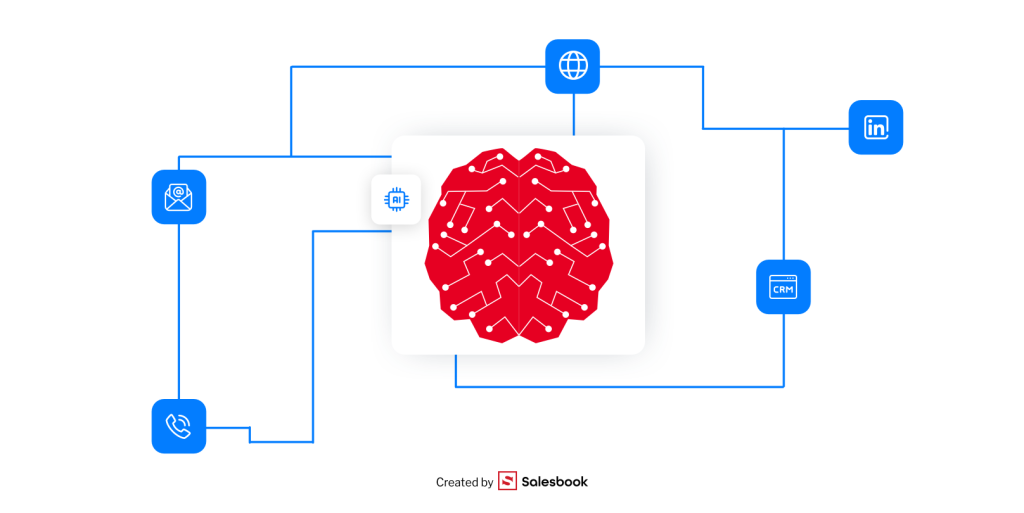
At the core of every AI powered CRM are machine learning models that continuously learn from both historical and real-time data.
These models rely on well-established AI techniques, including:
- Classification models (for example, advanced lead scoring and AI driven lead scoring)
- Predictive models (such as purchase probability or churn prediction)
- Clustering algorithms (for customer segmentation)
- Sequential models that analyze event sequences across the sales pipeline
Unlike rule-based CRM systems, these intelligent algorithms don’t operate once and stop. They constantly retrain and adapt. Every new customer interaction, every email, every click updates how the system evaluates customer behavior.
According to research published by the Association for Computing Machinery (ACM), CRM systems using machine learning significantly outperform static rule-based systems in predicting customer needs.
This is the turning point: AI CRM stops being a reporting tool and becomes an active participant in sales processes and customer service operations.
With advanced AI capabilities, an AI powered CRM system can analyze historical data, detect correlations in business data, and continuously refine predictions—making customer relationship management more proactive and intelligent.
AI That Analyzes Customer Behavior and Predicts Needs
One of the most powerful advantages of artificial intelligence in CRM is its ability to analyze customer behavior rather than relying solely on what customers explicitly declare.
An AI based CRM evaluates signals such as:
- Frequency of contact
- Response time to emails
- Changes in purchasing patterns
- Cross-channel activity
- Language patterns in customer inquiries
- Tone and urgency through sentiment analysis
By analyzing customer interactions at scale, the system can forecast customer behavior and anticipate:
- Emerging customer needs
- Risk of churn
- Buying readiness
- Decision-making barriers
- Upsell or cross-sell opportunities
Research published in the Journal of Business Research shows that predictive analytics based on AI significantly improves the effectiveness of sales processes and marketing campaigns.
This means an AI powered CRM doesn’t just track customer experiences—it actively interprets them and supports data driven decision making.
How AI CRM Analyzes Customer Behavior in Real Time
Modern AI CRM systems operate in real time. That capability fundamentally changes how organizations manage customer relationships.
These systems:
- Process streaming CRM data continuously
- React to customer interactions immediately
- Update recommendations without delay
- Trigger automated workflows based on behavioral signals
For example:
- Opening an email can automatically adjust lead scoring inside the CRM platform
- A phone conversation analyzed through natural language processing can influence the next recommended action for sales reps
- Website activity can trigger AI powered automation, such as personalized follow-ups or targeted marketing campaigns
This architecture aligns with the concept of real-time decision systems widely described in IEEE research.
In practical terms, an AI powered CRM system acts like an intelligent AI assistant embedded inside your CRM software. It monitors the sales pipeline, analyzes sales data, detects behavioral shifts, and delivers actionable insights precisely when they matter most.
That shift—from static dashboards to continuous intelligence—is what defines the evolution from traditional CRM solutions to truly AI powered CRM software.
And as generative AI becomes more integrated into CRM processes, these systems can now summarize conversations, draft customer communications, support an AI sales assistant, and automate routine tasks—all while improving customer engagement and overall sales performance.

From Data to Better Business Decisions
The ultimate goal of AI CRM is not automation for its own sake. It’s smarter, more confident business decisions.
An AI powered CRM system supports decision-making by:
- Reducing cognitive bias
- Eliminating intuition-based guesswork
- Grounding decisions in structured data analysis
- Turning complex business data into clear, actionable insights
Instead of relying on fragmented CRM data or gut feeling, sales teams and managers can make decisions based on predictive insights and measurable patterns.
In practical terms, this leads to:
- Better alignment between sales processes and individual customer needs
- More effective customer relationship management
- Stronger, data-backed customer relationships
- Improved customer satisfaction through personalized engagement
By combining predictive analytics, AI capabilities, and real-time monitoring of the sales pipeline, an AI powered CRM transforms raw information into strategic advantage.
Natural Language Processing in CRM — What NLP Can Really Do
Natural Language Processing (NLP) is one of the most advanced—and often underestimated—applications of artificial intelligence in CRM systems.
Modern AI powered CRM software uses NLP to:
- Analyze natural language in emails and conversations
- Detect intent, urgency, and emotional signals
- Perform sentiment analysis at scale
- Identify problems before customers explicitly describe them
Instead of simply scanning for keywords, NLP-enabled AI CRM systems understand context.
That means:
- The CRM platform interprets meaning, not just phrases
- Frustration or hesitation can be detected early
- Customer inquiries can be prioritized intelligently
- Support teams receive guidance for timely and relevant communication
Research from Stanford University shows that natural language models used in customer service significantly improve classification accuracy and reduce response times.
In a real-world AI based CRM, NLP becomes an intelligent AI assistant embedded inside the CRM software—continuously analyzing customer communications and delivering actionable insights.
Email, Call, and Content Analysis in Practice
One of the most practical uses of NLP inside an AI powered CRM is analyzing email messages and communication content across channels.
AI systems can:
- Automatically classify emails
- Detect urgency levels
- Identify recurring themes
- Analyze tone and emotional signals through sentiment analysis
- Flag escalation risks
As a result:
- Customer service teams can respond faster
- Sales reps receive signals about buying readiness
- Marketing campaigns can adapt messaging based on real customer language
- Organizations gain visibility into real customer expectations and concerns
Research published in Information Processing & Management confirms that NLP-based content analysis significantly improves customer engagement efficiency at scale.
By analyzing customer interactions in real time, an AI powered CRM system strengthens business intelligence across departments. It supports lead management, optimizes CRM processes, and enhances overall customer experiences.
Combined with generative ai, these systems can now summarize long email threads, draft follow-ups, and support both an AI sales assistant and an AI assistant module—reducing manual data entry while improving clarity and speed across business operations.
This is where AI CRM software truly differentiates itself from traditional CRM solutions: it doesn’t just store conversations—it understands them.

Call Transcripts and Conversation Context Analysis
Call transcripts are another area where AI technology brings measurable value to modern CRM systems.
By combining:
- Speech recognition
- Natural language processing
- Contextual analysis
- Sentiment analysis
an AI powered CRM system can:
- Automatically generate call notes (eliminating manual data entry)
- Identify key turning points in conversations
- Detect objections, hesitation, or buying signals
- Analyze customer needs expressed indirectly
Importantly, conversation analysis is not about monitoring employees. In an effective AI powered CRM, it is designed to:
- Improve customer satisfaction
- Enhance customer experiences
- Strengthen follow-up strategies in the sales pipeline
- Support sales reps with real-time guidance
Research published by IEEE shows that analyzing call transcripts helps identify communication patterns that directly impact customer satisfaction and long-term customer relationships.
In practice, this means an AI CRM system can highlight what works in successful conversations and provide actionable insights to sales teams—turning communication into structured business intelligence.
Personalization at a New Level — Intelligent Communication and Offers
Personalization in traditional CRM software often meant inserting a first name into an email. That era is over.
Modern AI CRM builds personalization through continuous data analysis, not isolated attributes.
An AI powered CRM system connects:
- Purchase history
- Demographic customer data
- Cross-channel customer behavior
- Reactions to previous marketing campaigns
- Real-time customer interactions
- External data sources
By analyzing customer data holistically, the system can deliver predictive insights that go far beyond static segmentation.
This enables the creation of personalized offers that:
- Address real customer needs
- Match the exact stage of the sales pipeline
- Adapt to evolving customer expectations
- Reflect dynamic customer behavior patterns
Through AI powered automation and automated workflows, the CRM platform can determine:
- When to reach out
- Through which channel
- With what message
- At what level of urgency
That results in timely and relevant communication—at scale.
As a result, organizations can improve customer satisfaction and build stronger customer relationships without increasing operational complexity.
Research published in the Journal of Interactive Marketing shows that personalization based on predictive analytics significantly outperforms traditional segmentation in influencing purchase decisions.
When generative AI is integrated into AI powered CRM software, it can even draft personalized responses, generate tailored proposals, and support an embedded AI assistant or AI sales assistant—ensuring consistent, intelligent customer engagement across all CRM processes.
This is how modern AI based CRM solutions elevate customer experiences from transactional to strategic—turning every interaction into an opportunity for growth.

Automating Routine Tasks and Integrating with Other Systems
One of the most measurable outcomes of implementing AI CRM is the automation of tasks that once consumed valuable team time without generating proportional value.
An AI powered CRM system can take over:
- Automating routine tasks and administrative activities
- Updating customer data automatically
- Synchronizing information between CRM systems and external platforms
- Generating notes, summaries, and recommendations
- Supporting lead management without manual intervention
Through AI powered automation, companies reduce repetitive data entry and free up sales reps to focus on high-impact customer interactions.
However, automation delivers real value only when the CRM platform is integrated with other systems—marketing automation platforms, ERP systems, financial tools, communication platforms, and customer support software.
When properly connected, AI powered CRM software extends automation across entire business processes, not just isolated tasks.
According to the World Economic Forum, integrating AI into operational systems is one of the key factors driving tangible ROI from automation initiatives.
This is where modern AI based CRM solutions stand out: they function as intelligent hubs that connect business data across systems, enabling smarter data management and more efficient business operations.
Implementing AI in CRM — From Strategy to Real Business Value
Implementing artificial intelligence in CRM systems is not just an IT project. It is a strategic transformation that impacts sales teams, marketing campaigns, customer service, and overall customer relationship management.
The most common mistake? Focusing on AI features instead of business problems.
AI delivers value only when:
- It supports clearly defined objectives (such as improving customer satisfaction or enhancing sales forecasting)
- It operates on high-quality CRM data and business data
- It is embedded into real CRM processes and decision frameworks
Research published by the University of Oxford highlights that AI initiatives succeed not because of technology alone, but because they align with organizational decision-making processes.
An AI powered CRM becomes effective when its AI capabilities directly support sales performance, lead scoring, predictive analytics, and customer engagement goals.
How to Prepare Your Organization for AI CRM
Successful implementation begins long before deploying AI CRM software.
Key preparation steps include:
1. Data Audit
Evaluate the quality, completeness, and accuracy of customer data and CRM data. AI depends on reliable inputs. Poor data management will compromise predictive insights and business intelligence.
2. Process Mapping
Identify where AI can genuinely improve CRM processes and sales processes. Avoid automating chaos. Instead, refine workflows before layering on AI powered tools.
3. Team Education
Educate sales teams and customer service staff about how AI powered CRM systems work. Adoption determines success. Without trust and understanding, even the best AI functionality will go unused.
4. Pilot Implementation
Start with targeted use cases—such as AI driven lead scoring, predictive analytics for sales forecasting, or AI powered chatbots for handling customer inquiries. Gradual rollout reduces risk and improves organizational readiness.
AI only supports better outcomes when an organization is prepared to embrace data driven decision making and adapt its business processes.
A European Commission report on AI adoption confirms that organizational readiness often matters more than technological sophistication.
Common Implementation Barriers and Mistakes
Despite the promise of AI CRM systems, many initiatives fail for predictable reasons.
The most common barriers include:
- Poor-quality customer data
- Lack of clearly defined business objectives
- Automating flawed CRM processes
- Resistance from operational teams
- Underestimating organizational costs (not just technical expenses)
AI does not fix broken systems. It amplifies them.
An AI powered CRM system requires operational maturity. Without structured CRM processes, clean business data, and aligned leadership, even the best AI features will fail to deliver real value.
Research from the RAND Corporation shows that most unsuccessful AI projects fail due to organizational challenges—not technological limitations.
That insight is critical: the best AI CRM is not simply the one with the most advanced AI capabilities or generative AImodules. It is the one strategically aligned with your sales pipeline, marketing campaigns, and long-term customer relationships.
When properly implemented, an AI powered CRM becomes more than software. It evolves into an intelligent AI assistant embedded in your CRM platform—supporting customer experiences, enhancing predictive analytics, enabling sales forecasting, and delivering actionable insights across the entire organization.
AI Features in Salesbook CRM — Artificial Intelligence Embedded in a Real Sales Process
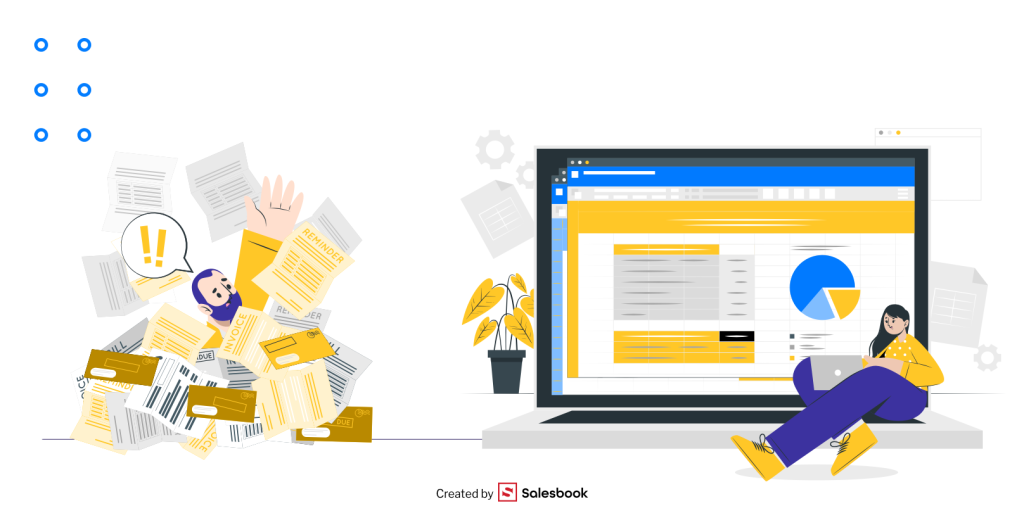
Many CRM systems today claim to use artificial intelligence. In practice, however, these are often isolated AI features disconnected from the actual sales pipeline.
In a mature approach—such as the one implemented in Salesbook—AI CRM is not an add-on. It is the connective tissue of the entire customer relationship management process.
The key difference is simple:
- Does not operate alongside the CRM
- Is not an experimental standalone module
- Functions as an embedded, AI powered CRM system
- Supports sales teams in real time
Instead of offering fragmented AI functionality, Salesbook integrates advanced AI capabilities directly into daily sales processes.
This means artificial intelligence becomes part of how customer relationships are built, managed, and optimized—not an optional extra.
1. Analyzing Customer Interactions and Sales Team Performance
One of the most powerful key AI features in Salesbook is its ability to analyze customer interactions and the work of sales reps simultaneously.
Through integrated AI powered CRM software, the system analyzes:
- Sales presentations
- Meetings and call transcripts
- CRM activity logs
- Customer engagement patterns
- Sales pipeline movements
Using predictive analytics and structured data analysis, the system can:
- Identify which elements of the sales process actually drive results
- Highlight differences in sales performance between team members
- Detect behavioral patterns that impact customer satisfaction
- Provide actionable insights to improve future outcomes
This approach aligns with the evolution of AI CRM systems—moving beyond analyzing customer behavior alone.
Salesbook’s AI powered CRM also evaluates how sales teams operate. It doesn’t just monitor CRM data; it connects business data, customer experiences, and team actions into a single intelligence layer.
That’s still rare in the CRM market.
Most CRM solutions focus exclusively on customer behavior. Salesbook expands the scope—analyzing customer interactions and internal performance to strengthen both sides of the customer relationship management equation.
By embedding an intelligent AI assistant directly into the CRM platform, Salesbook supports sales reps with real-time recommendations, reinforces best practices, and helps automate routine tasks without disrupting established business processes.
In this model, AI powered tools are not decorative. They actively shape smarter decisions, stronger customer relationships, and measurable improvements in sales performance.
2. Decision Support Instead of Blind Automation
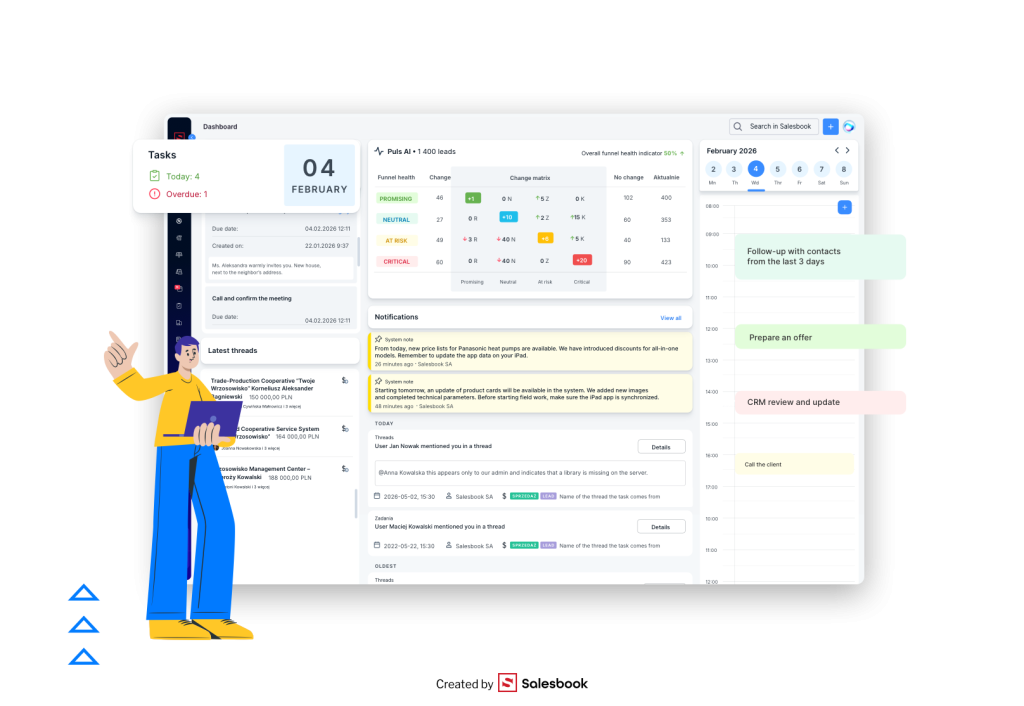
Rather than forcing automation for its own sake, AI in Salesbook acts as a decision-support system.
Instead of simply trying to automate tasks across CRM processes, the AI powered CRM system:
- Identifies risk moments inside the sales pipeline
- Evaluates the quality of customer interactions
- Detects engagement gaps before deals stall
- Provides predictive insights without removing human control
This approach reflects best practices in implementing AI CRM systems, where artificial intelligence strengthens sales teams rather than attempting to replace them.
Salesbook’s AI powered CRM does not automate business processes blindly. It enhances data driven decision making by combining predictive analytics, structured data analysis, and contextual interpretation of customer behavior.
The goal is not to remove human judgment—but to improve it.
Through embedded AI capabilities, sales reps and managers receive actionable insights at the right time, helping them improve customer engagement, refine marketing campaigns, and strengthen overall customer relationships.
3. Working with Real Data, Not Declarations
Another core advantage of Salesbook’s AI based CRM is that it operates on real business data—not assumptions or self-reported inputs.
The system relies on:
- Verified customer data
- Purchase history
- Meeting and presentation records
- Sales pipeline progression
- Actual customer interactions with sales materials
- Behavioral signals across communication channels
By analyzing customer interactions and integrating CRM data across the entire CRM platform, the system can forecast customer behavior and assess buying readiness with far greater accuracy than static rule-based CRM software.
This is where modern AI powered CRM software differentiates itself from traditional CRM solutions: it analyzes real activity instead of declared intent.
Combined with generative AI and advanced AI features, Salesbook transforms structured and unstructured business data into measurable intelligence—supporting lead management, sales forecasting, and long-term customer relationship management.
The result is a truly AI powered CRM system designed around real customer experiences, real sales processes, and real business impact.
As a result, the CRM no longer relies on subjective opinions. It operates on structured data analysis embedded in the real context of B2B sales processes.
This deeply integrated model of AI CRM—where artificial intelligence is built into the workflow rather than layered on top—demonstrates what modern CRM solutions should look like. An AI powered CRM system must be connected to actual customer interactions, real sales pipeline dynamics, and measurable business data.
Anything less is surface-level innovation.
AI in CRM as a Competitive Advantage — Not a Gadget
Artificial intelligence in CRM systems is no longer innovation for innovation’s sake. It is a response to very specific business challenges:
- The growing complexity of customer relationships
- An overload of customer data and a shortage of time
- The need for faster, data driven decision making
- Increasing customer expectations around personalization and responsiveness
A well-designed AI powered CRM supports:
- More effective customer relationship management
- Deeper understanding of customer behavior
- Improved customer satisfaction
- Higher-quality customer experiences
- Smarter execution by sales teams and service teams
Through predictive analytics, advanced AI capabilities, and continuous analysis of CRM data, an AI based CRM enables organizations to forecast customer behavior and anticipate needs instead of reacting to problems.
But this works only under one condition:
AI must be embedded into business processes—not attached as a decorative feature.
Companies that treat AI CRM software as a gadget often end up with expensive AI features that have little impact on sales performance or customer engagement.
Companies that use AI as an analytical and decision-support layer—integrated into their CRM platform—create long-term competitive advantage.
The future of artificial intelligence in customer relationship management is not full autonomy. It is intelligent collaboration between technology and people.
An effective AI powered CRM system acts as an AI assistant—supporting human judgment, enhancing business intelligence, and delivering actionable insights across sales forecasting, lead management, marketing campaigns, and customer communications.
That is where modern AI CRM systems are heading: not toward replacing humans, but toward empowering them with smarter tools, better predictive insights, and scalable, high-quality customer experiences.
Table of Contents