
 EN
EN  PL
PL 



AI in Business: How Can Companies Use Artificial Intelligence?


Until recently, artificial intelligence solutions were largely limited to research teams and large technology companies. Today, the same mechanisms are embedded in everyday tools used in sales, marketing, and customer service. AI in business is rapidly becoming one of the most important technologies supporting day-to-day operations. Companies use artificial intelligence to analyze data, automate processes, handle customer interactions, and even generate marketing content.
In other words, AI is no longer a technological experiment — it is becoming a practical tool that supports team productivity and business decision-making. More and more organizations report using artificial intelligence in at least one area of their operations, from marketing and sales to logistics and operational management.
What Is Artificial Intelligence and Why AI in Business Is Becoming So Important
AI in business refers to the use of computer systems capable of analyzing data, recognizing patterns, and supporting decision-making. In practice, this means using algorithms that learn from large datasets and continuously improve their performance over time. Artificial intelligence should not be treated as a single technology. Instead, it is a broad set of methods and tools that enable companies to automate processes, analyze user behavior, and support business growth across multiple areas. AI in business can be applied in marketing, management, production, customer service, and market analysis.For organizations, this means faster data processing, deeper insight into customer needs, and more informed decision-making. AI systems can identify hidden relationships in data, optimize operational processes, and help companies build a competitive advantage in their industries.
Increasingly, artificial intelligence is used not only for analyzing data but also for generating text, producing reports, forecasting market trends, and personalizing services. As a result, AI technologies are becoming part of core business infrastructure — much like CRM systems, analytics platforms, or project management tools.
Key Technologies: Machine Learning, Natural Language Processing, and Computer Vision
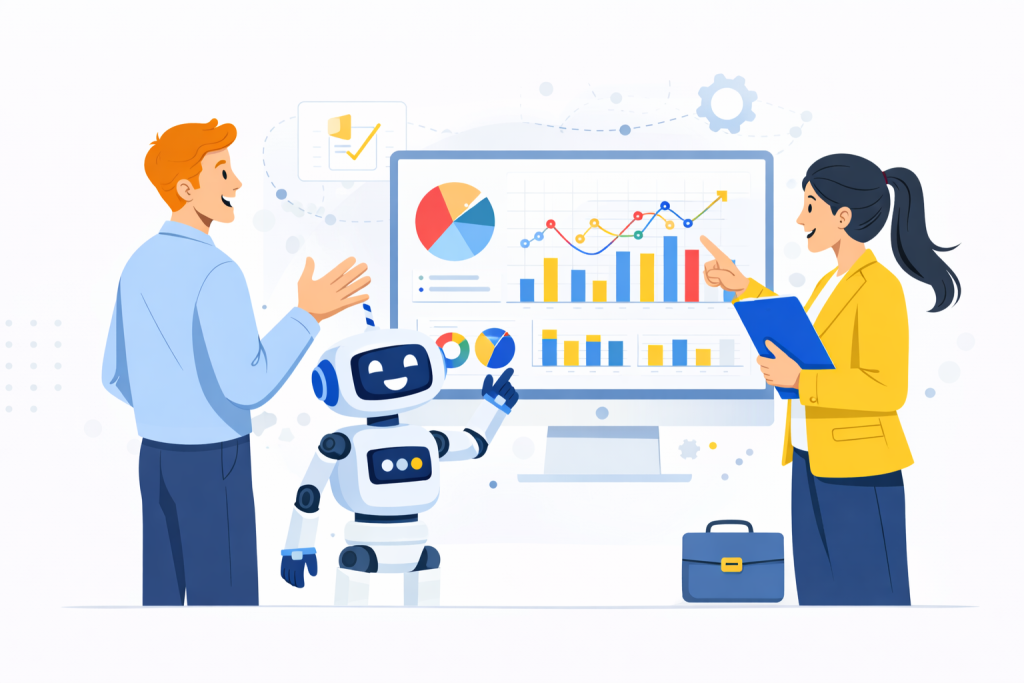
The development of AI in business is driven by several core technologies that enable different types of data analysis and task automation. One of the most important is machine learning. In this approach, algorithms analyze large datasets and learn to identify relationships between variables. In business environments, machine learning is commonly used for sales forecasting, customer behavior analysis, and logistics optimization. Because these systems can process massive amounts of information, they help companies respond more quickly to changes in the market.
Another key technology is natural language processing (NLP). NLP allows computers to analyze and understand human language — both written text and spoken communication. This capability enables tools such as chatbots, sentiment analysis systems, and AI-powered content generation platforms. In business, natural language processing plays a particularly important role in customer service and in analyzing information from emails, chats, and social media.
A third major area is computer vision. This technology enables AI systems to interpret and analyze images and video. Computer vision is widely used in manufacturing quality control, security systems, and the analysis of customer behavior in physical environments such as retail stores. When combined, these technologies allow artificial intelligence systems to process different types of data — text, images, and digital signals — and transform them into meaningful business insights.
How Companies Use AI in Everyday Business Processes
For many organizations, the key question today is no longer whether to adopt AI, but how to implement AI in a practical and scalable way. Most AI initiatives start with concrete operational challenges such as process automation, data analysis, or improving customer service efficiency.
Today, AI supports everyday business activities across many areas of an organization. With the help of AI tools, companies can accelerate team productivity, reduce operational costs, and manage resources more effectively. One of the greatest advantages of AI is its ability to process large volumes of data in a very short time. This allows companies to identify new market opportunities faster, respond to changes in customer behavior, and make more informed strategic decisions.
Automating Processes and Repetitive Tasks
One of the most common applications of AI in business is process automation. In many organizations, a significant portion of daily work involves repetitive tasks such as entering data into systems, analyzing reports, or preparing documents. AI allows companies to transfer a large share of these activities to automated systems. In practice, this shifts human work away from repetitive tasks and toward activities that require experience, business context, and direct interaction with customers.
Artificial intelligence is particularly effective when applied to routine tasks that traditionally consume a large portion of employee time. Activities such as data entry, document classification, and report preparation are often repetitive and vulnerable to human error. By automating these time-consuming tasks, organizations can significantly reduce operational friction and allow employees to focus on more strategic work.
AI enables businesses to redesign the way many business operations function. Instead of relying on manual processes, companies increasingly deploy AI-driven solutions that analyze information, trigger actions, and support employees through intelligent systems and virtual assistants.
When companies begin utilizing AI in these areas, the benefits often become visible quickly. Organizations report significant cost savings, improved process consistency, and better allocation of human expertise. This shift also allows IT teams to focus less on maintaining manual workflows and more on building scalable digital infrastructure.
Process automation can include tasks such as:
– generating reports and data summaries
– automatically creating marketing copy and product descriptions
– analyzing documents and classifying information
– automatically processing customer inquiries
Using AI for process automation leads to higher operational efficiency and better time management across teams. AI-powered systems can complete tasks faster than humans while also reducing the risk of errors.
Data Analysis and Identifying Market Trends
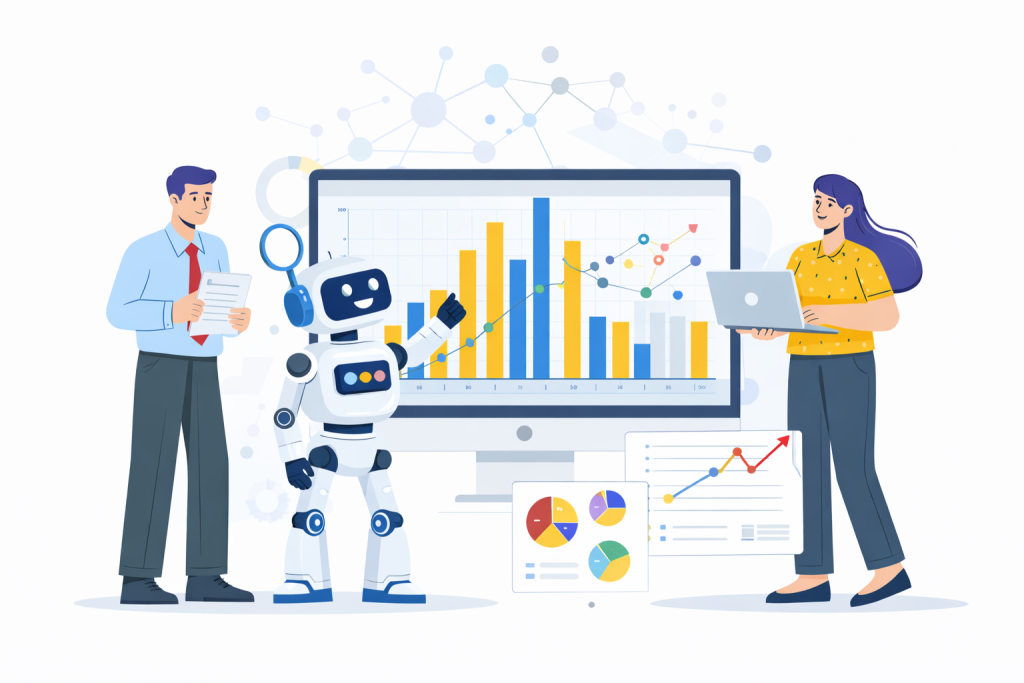
Another area where AI in business plays a crucial role is data analysis. Every company generates hundreds of data points every day — from customer conversation histories and sales results to user activity in digital systems and marketing campaign performance. Traditional methods of data analysis often fail to fully leverage the potential of this information. Artificial intelligence enables companies to uncover hidden patterns and anticipate market trends.
Modern companies collect enormous volumes of customer data, operational metrics, and behavioral signals from digital platforms. Processing this information manually is almost impossible. AI systems powered by machine learning algorithms, neural networks, and machine learning models allow organizations to transform raw information into data-driven insights.
This is where technologies such as predictive analytics and advanced data analytics become particularly valuable. These tools help companies anticipate demand, identify hidden correlations in datasets, and support data-driven decisions across multiple business functions.
In many industries, AI is also used for market research, identifying emerging consumer patterns and understanding customer preferences. These capabilities allow companies to adapt products, services, and messaging faster than traditional analytical methods would allow.
For business leaders, this shift represents a fundamental change in how decisions are made. Instead of relying primarily on experience or intuition, organizations increasingly combine human intelligence with machine-generated insights.
AI systems are able to process large streams of data almost instantly, helping companies respond more quickly to changing customer behavior and market conditions. In marketing, AI-driven data analysis helps with tasks such as customer segmentation, personalized communication, and campaign optimization. Advanced data analysis also helps companies better understand customer needs and predict future purchasing behavior. This insight makes it possible to design more relevant products and services.
Making Business Decisions with AI
As the amount of available data continues to grow, business decision-making becomes increasingly complex. Managers must analyze multiple variables — from financial metrics and customer behavior to competitor activity. AI supports this process by delivering recommendations based on data analysis. Machine learning systems can identify relationships between different variables and highlight the most likely future scenarios.
In practice, this means AI can help organizations make decisions related to areas such as:
– marketing strategy
– production planning
– inventory management
– development of new products and services
In many cases, artificial intelligence can also help reduce the risk of poor decisions. Algorithms analyze data systematically and without emotional bias, allowing managers to make more rational and informed choices. By leveraging AI, companies can respond more quickly to market changes, manage resources more effectively, and compete more successfully in an increasingly complex business environment.
Using Artificial Intelligence in Customer Service and Marketing
One of the areas where AI in business is evolving the fastest is customer service and marketing. In these fields, artificial intelligence helps companies better understand customer needs, personalize communication, and respond to user inquiries more efficiently. For businesses, this means not only improved service quality but also greater operational efficiency. AI makes it possible to handle large volumes of customer interactions simultaneously, analyze user behavior, and adapt offers to changing preferences.
According to a Salesforce report, 73% of customers expect companies to understand their unique needs and expectations. In practice, meeting these expectations requires advanced analytics tools and technologies powered by artificial intelligence.
NLP-Powered Chatbots in Customer Service
Chatbots powered by natural language processing (NLP) are becoming an increasingly important component of customer service. These systems can analyze user questions, interpret intent, and generate responses in a way that resembles a human conversation.
NLP-based chatbots enable companies to provide customer support around the clock. In many organizations, they handle basic inquiries such as product information, order status, or service availability. Artificial intelligence in customer service also makes it possible to analyze large volumes of data from conversations, emails, and contact forms. This helps companies better understand customer needs and identify the most common issues. As a result, customer service can operate in real time, significantly improving user experience and reducing response times.
AI systems used in customer service are becoming increasingly sophisticated. Many organizations now deploy virtual assistants capable of handling complex customer inquiries with minimal human intervention. These systems continuously learn from past interactions and improve their responses over time. By analyzing conversation history and customer data, AI platforms can identify patterns in customer behavior and predict potential issues before they escalate. The result is not only faster response times but also enhanced customer satisfaction and improved customer engagement. For companies operating at scale, this type of automation can dramatically streamline operations while maintaining a high level of service quality.
Personalized Communication and Marketing Campaigns
AI in marketing is transforming how companies design campaigns and communicate with customers. Through data analysis, businesses can tailor marketing messages to specific user preferences. Recent advances in generative AI have dramatically expanded the role artificial intelligence plays in marketing. Modern generative AI tools allow companies to create marketing assets at scale — from product descriptions to social media posts, campaign concepts, and customer messages. These AI models analyze historical campaign performance, user behavior, and customer preferences to generate content that aligns with personalized marketing strategies. As a result, companies can deliver more relevant messages and significantly improve customer engagement.
At the same time, marketers are learning how to balance automation with creativity. While generative AI can accelerate content production, effective marketing still depends on strong brand strategy and a deep understanding of customer needs.
AI-powered systems analyze factors such as:
– customer purchase history
– user behavior on websites
– responses to previous marketing campaigns
– demographic data and purchasing context
Based on these insights, AI can automatically personalize marketing content, product recommendations, and promotional offers. This makes communication far more precise and relevant. In marketing, AI is also used to generate advertising copy, analyze campaign performance, and optimize promotional strategies. AI tools allow marketers to create content faster and test different messaging variations more efficiently. This means that AI in business leads to a deeper understanding of customer needs and more effective marketing efforts.
AI Tools and Their Use Across Different Industries
The growth of AI in business has led to the emergence of a wide range of tools that support organizations in their daily operations. These tools include both advanced analytics solutions and systems designed to automate processes or enhance communication with customers. The rapid growth of AI technologies is also reflected in the expansion of the global AI market, which continues to attract investment from companies across industries. Organizations are exploring how AI capabilities can improve efficiency, strengthen security, and support long-term innovation.
In sectors such as finance, AI is increasingly used for fraud detection, monitoring transactions and identifying suspicious activity patterns. In logistics and manufacturing, AI supports supply chain optimization and improves supply chain efficiency, helping companies predict demand and manage inventory more effectively. These developments show that AI adoption is no longer limited to technology companies. Today, organizations across the business world are integrating AI into core processes as part of broader digital transformation initiatives.
Most AI tools operate based on machine learning and data analysis, enabling them to process large datasets, identify patterns, and generate recommendations for business actions. The way artificial intelligence is applied varies across industries. In e-commerce, AI is primarily used for offer personalization and analyzing customer behavior. In the financial sector, AI systems help assess risk and detect irregularities in transactions. In manufacturing, AI supports production process optimization and product quality control. Meanwhile, in logistics, AI-powered solutions help companies manage supply chains and plan transportation more efficiently.
The Most Popular AI Solutions Supporting Businesses
Today, companies have access to many AI tools designed to automate everyday business activities.
Among the most widely used solutions are:
– tools for data analysis and market trend forecasting
– systems that generate marketing copy and content
– platforms that automate customer service
– tools that analyze documents and process information
Many of these solutions can be integrated with other technologies used within an organization, such as CRM systems or analytics platforms. Integrating AI with existing business technologies allows companies to create more comprehensive, data-driven work environments.
AI in Data Analysis, Resource Management, and Supply Chain Management
One of the most important applications of AI in business is supporting organizational management. AI-powered systems help analyze operational data and optimize business processes.
In resource management, AI can assist with production planning, inventory analysis, and optimizing the use of company infrastructure. As a result, organizations can reduce operational costs and increase process efficiency.
AI also plays an important role in supply chain management. Algorithms analyzing logistics data can predict product demand, optimize transportation routes, and reduce the risk of delivery delays.
As a result, the use of artificial intelligence leads to more stable and predictable operational processes.
How AI Helps Companies Build a Competitive Advantage
Organizations that successfully implement AI often respond faster to market changes and gain deeper insight into customer behavior. As a result, they are better positioned to build a competitive advantage within their industry. For many organizations, AI is becoming a central element of business strategy. Companies that successfully integrate AI into their business operations are better positioned to respond to market shifts, improve operational efficiency, and develop new products or services.
The transformative impact AI can have on organizations is already visible in industries ranging from retail and finance to healthcare and logistics. Businesses that align AI adoption with their business needs often discover that AI supports innovation across multiple areas of the company. Ultimately, the long-term value of artificial intelligence will depend on how well organizations combine advanced technologies with human expertise. When human intelligence and machine intelligence work together, companies are better equipped to adapt to change and build the capabilities required for future success.
AI enables companies to analyze data more quickly, automate processes, and make business decisions based on real information rather than intuition. This allows organizations to manage resources more efficiently and develop new products and services more effectively. It is also worth noting that AI changes the way teams work. Tools powered by artificial intelligence support employees in tasks such as data analysis, report generation, and content creation. This increases productivity and accelerates project execution. In many industries, artificial intelligence is no longer considered an experimental technology. Instead, it is becoming a standard capability that allows companies to remain competitive in modern markets.
The Future of AI in Business: Key Technology Trends
In the coming years, AI in business will play an even greater role in organizational management and data analysis. Advances in technology are making AI systems more accessible and easier to implement.
One important trend is the continued automation of business processes and the development of tools that support real-time data analysis. This will allow companies to respond even faster to market changes and evolving customer needs.
Another major direction is the integration of AI with other technologies, from analytics systems to communication platforms and marketing tools. Connecting these technologies will enable companies to build more integrated, data-driven work environments.
As a result, artificial intelligence is likely to become one of the most important elements of modern business infrastructure.
Summary: How Companies Can Effectively Use AI in Business
AI in business is transforming how organizations operate across many areas — from marketing and customer service to data analysis and operational management.
The application of artificial intelligence enables companies to automate repetitive tasks, analyze large volumes of data, and better understand customer needs. As a result, businesses can improve operational efficiency, make more informed decisions, and develop new products and services.
In the coming years, the role of AI in business will likely continue to grow. Organizations that invest in artificial intelligence technologies today will be better positioned to build competitive advantages and adapt to rapidly changing market conditions.
FAQ
Can AI support recruitment and job interviews?
Yes. More and more companies use systems based on artificial intelligence to pre-screen candidates and analyze resumes. AI-powered tools can quickly compare experience, assess candidate skills, and support HR teams during job interviews.
What measurable benefits can AI bring to a company?
Introducing AI into an organization can deliver tangible benefits, such as faster data analysis, process automation, and better alignment of services with customer needs. In many companies, AI is becoming a widely used tool that supports decision-making and improves team productivity.
Will AI become even more important for businesses in the future?
Most indicators suggest it will. In the future, more everyday business processes will be supported by artificial intelligence, from data analysis and customer service to the development of new services. Companies that adopt these technologies early can build stronger capabilities and gain a competitive edge.
Table of Contents