 EN
EN  PL
PL  DE
DE 



AI Adoption In a Company — How To Do It Wisely


Many people approach AI in business with enthusiasm, but only a few manage to turn it into real results. Despite the growing availability of AI tools, most organizations still fail to use the full potential of artificial intelligence — from automating repetitive tasks, through optimizing business processes, to intelligent data analysis and better decision making at the executive level.
In practice, it is not the technology itself that determines success, but the way AI implementation is planned, how AI solutions are integrated into everyday work, and how they are aligned with business goals. In this article, I will show you how to approach artificial intelligence implementation wisely, how to avoid tool chaos, and how — with the use of AI — to build a competitive advantage that genuinely supports business performance.
Why companies still fail to fully leverage the potential of artificial intelligence
Even though the AI revolution has been discussed for years, many organizations are still standing still. Most often, this is not due to a lack of AI technologies, but rather a lack of business readiness for AI adoption. Implementing AI, even at a basic level, requires a clear AI implementation process, ownership, and an understanding of where AI systems can truly support business operations.
One common issue is the belief that AI implementation simply means purchasing a tool and letting it “work on its own.” In reality, real business value comes from combining AI capabilities with knowledge about customers, business processes, and operations. When this synergy is missing, companies use AI only superficially — for isolated tasks instead of meaningful optimization of business processes.
Another challenge is organizational readiness. Teams often do not know how to work with AI algorithms, while leaders may lack awareness of the implications of AI initiatives in critical areas such as customer service, sales, or compliance. Concerns about data quality also play a major role. Without proper data analysis, even the most advanced AI solutions will produce flawed results, which naturally slows down AI adoption.
There is also a psychological factor — fear of change. Employees worry that automation will take away their jobs, rather than seeing AI as an opportunity to automate repetitive tasks and shift focus toward work that requires human intelligence, creativity, and direct customer interaction.
The result? In many companies, artificial intelligence remains a tool with enormous potential that is never fully realized. And it is the strategic approach to AI — not the purchase of another tool — that determines whether an organization truly moves forward or merely appears innovative.

Artificial intelligence implementation and company strategy — how to align it with business goals
Successful AI implementation does not start with choosing a tool — it starts with deciding which business goals you want to achieve with it. Artificial intelligence only makes sense when it strengthens what matters most in your company: sales, customer service, business operations, team efficiency, or new product development.
The first step is to clearly define the areas where the use of AI can create a competitive advantage. This may include automating sales activities, improving audience segmentation through data analysis, responding faster to customer inquiries, or intelligently using historical data from CRM systems. Only after this stage does it make sense to select AI solutions and design the AI implementation process.
It is also critical to understand the “impact map.” Every AI initiative affects people, technology, and workplace culture. If AI systems are meant to improve customer service, teams must be prepared, supervision procedures must be established, and escalation mechanisms must be implemented to ensure decision making remains safe and predictable.
Taking a broader perspective, AI should support the areas closest to strategic business value — revenue generation, customer retention, data quality, profitability, and cost reduction. If an AI tool supports business processes only in isolated use cases, it is merely a gadget. If it strengthens the core value streams of the organization, it becomes a true artificial intelligence implementation.
How to prepare an organization for business process automation
Many companies want to start implementing AI as quickly as possible, but rarely ask the most important question: is the organization ready? In practice, automating business processes is like renovating an old house — before introducing advanced AI technologies, the foundations must be solid.
The first foundation is clear communication.
People need to understand why the company is pursuing AI adoption, how it will help them, and how it will affect their daily work. When teams see that AI is designed to automate repetitive tasks and improve operational efficiency, resistance is significantly lower. Transparency is a simple but often overlooked way to build trust and engagement.
The second element of preparation is process organization.
Implementing AI in chaos is impossible — AI technologies will not fix unclear procedures or systemic errors. Organizations must first identify which business processes require stabilization and which are ready for automation. This is where real improvements in business operations begin.
The third step is skills assessment.
Teams do not need to be experts in data science or software engineering, but they must be able to collaborate with computer systems that support work through the use of AI. For example, a customer service representative does not need to understand AI models or neural networks, but should know how AI tools support customer interactions, transfer relevant data to CRM systems, and when human oversight is required.
Understand both the capabilities and limitations of artificial intelligence.
When companies know how to use AI in data analysis, demand forecasting, or communication personalization, they can make better decisions about where implementing AI will deliver the highest business value. The ability to consciously choose automation areas is often the first step toward building a sustainable competitive advantage and unlocking the full benefits of AI.
Business process audit — where to start before AI tools enter the picture
Before a company reaches for advanced AI tools, it must first understand its own business processes. An audit is essentially an organizational “X-ray” — it shows which areas are working well and which require improvement. Only then does AI implementation in a company make sense and deliver real business value.
The first stage of the audit is workflow analysis. This means identifying points where employees lose time, handle repetitive tasks, or rely on manual data entry and handoffs between computer systems. These areas are ideal candidates for automation — especially where processes are repetitive, error-prone, or lack standardization. This is often where the use of AI can immediately improve business operations.
The next step is understanding the customer. AI technologies work best when they are built on data about customer behavior, needs, purchase history, and interactions with the company. This enables more personalized offers, better recommendations, and even the ability to identify data patterns and anticipate market trends. This type of artificial intelligence implementation often delivers a fast return on investment.
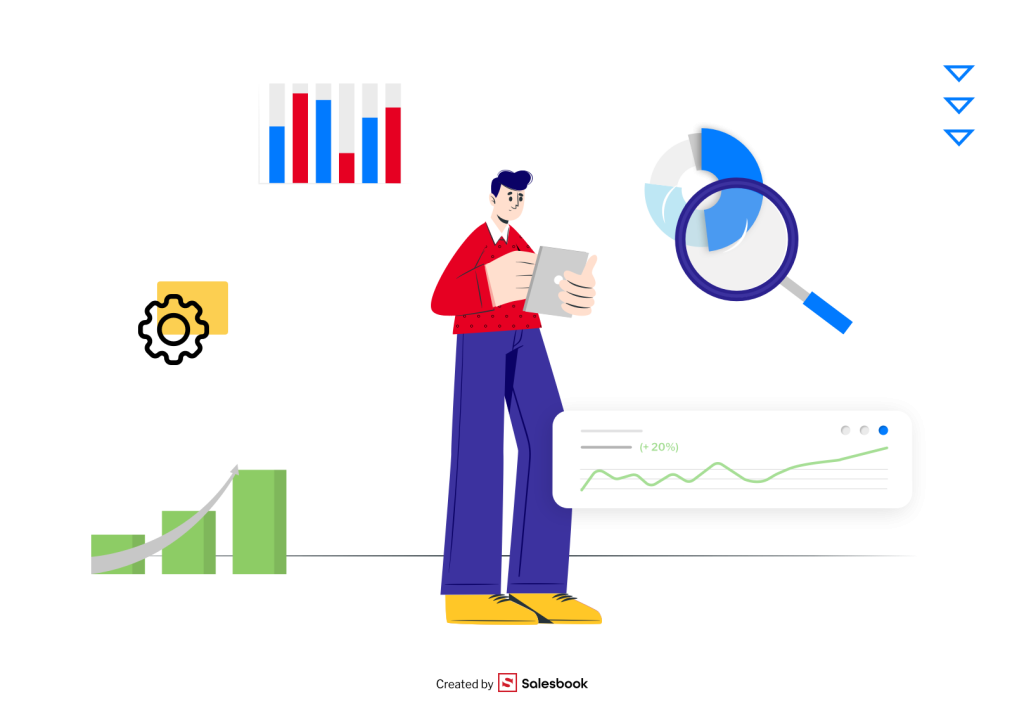
Another critical area is data quality. If data is fragmented, inconsistent, or incomplete, even the most advanced AI solutions will fail to deliver reliable results. Organizations aiming for successful AI implementation must first organize their data sources, ensure high quality data, and introduce data quality control mechanisms. Poor data quality is one of the most common barriers to AI adoption.
This is also where AI capabilities such as natural language processing and AI models designed to understand human language come into play. These AI systems can analyze conversations, emails, customer feedback, service tickets, and customer inquiries. This creates a powerful foundation for data analysis, allowing companies to uncover recurring issues, behavioral patterns, and opportunities for continuous improvement.
A proper audit should conclude with clear recommendations: which business processes are ready for immediate automation, which require optimization first, and where implementing AI will create an immediate competitive advantage. Only then do the next steps — selecting AI technologies, launching AI projects, and scaling AI deployment — make sense and lead to real improvements in operational efficiency.
Optimizing business processes with the help of AI — real-world examples and best practices
Companies that achieve the greatest success in implementing AI take a methodical approach: they select processes that operate at scale, involve high repetition, and offer strong cost reduction potential. These are exactly the areas where AI delivers quick wins, maintains operational consistency, and aligns AI solutions with core business goals.
1. Customer service: conversation analysis and real-time automated guidance
Technologies based on natural language processing (NLP) are already being used at massive scale. There are many examples — including solutions built on Google Dialogflow or AWS Comprehend — that analyze millions of customer conversations, extract recurring themes, identify customer problems, and help organizations design better business processes.
AI systems can analyze call center conversations in real time, suggest the next best action to agents, recommend solutions, and even automatically classify customer inquiries. This allows companies to reduce average handling time and improve response quality — which directly translates into higher customer satisfaction.
The same applies to chat channels. In many organizations, AI chatbots handle routine questions, automating repetitive tasks and relieving human agents from routine tasks. This allows employees to focus on more complex issues that require domain expertise, problem solving skills, and empathy.
2. Communication personalization and recommendations
The largest e-commerce companies — including Amazon and Zalando — have been using AI technologies for years to build product recommendation systems. Everything is driven by data on customer behavior: purchase history, clicks, searches, and time spent on the website.
The same types of AI algorithms can be applied in virtually any company, including B2B organizations. Machine learning models analyze audience preferences and tailor communication to individual needs, enabling more accurate offer personalization and supporting better decision making in marketing and sales activities.
3. Sales optimization through data analysis
Sales teams can use AI solutions, among others, for:
- lead scoring,
- demand forecasting,
- contact prioritization,
- analysis of customer activity on social media.
Example: platforms such as Salesbook, HubSpot, Salesforce, and Microsoft Dynamics are introducing native features based on generative AI that analyze CRM data and recommend next actions for sales reps. Through advanced data analysis, teams can make faster decisions and align daily activities with a broader business strategy.
4. Automating reporting and financial analysis
An increasing number of companies rely on AI implementation to support areas such as:
- anomaly detection in data,
- automated summaries of financial reports,
- identifying deviations from budgets.
Microsoft Excel and Google Sheets already offer built-in capabilities based on generative AI and machine learning algorithms that can analyze thousands of rows of data in seconds. Artificial intelligence proves especially effective wherever tasks previously required dozens of hours of manual work, significantly improving efficiency and cost control.
5. Content creation — but only where it truly makes sense
AI can support teams in areas such as:
- writing first drafts of emails,
- suggesting content topics,
- generating ideas for marketing automation,
- accelerating content production.
One principle is critical: companies that succeed do not treat AI as a text generator, but as a tool that speeds up work and improves the quality of business processes.
Process automation — what can be automated today, and what still cannot?
Automation is not a goal in itself — it is a tool designed to support business goals. That is why it is so important to first understand which areas are ready for automation and which still require human involvement.
What can already be automated today?
1. Data entry and system updates
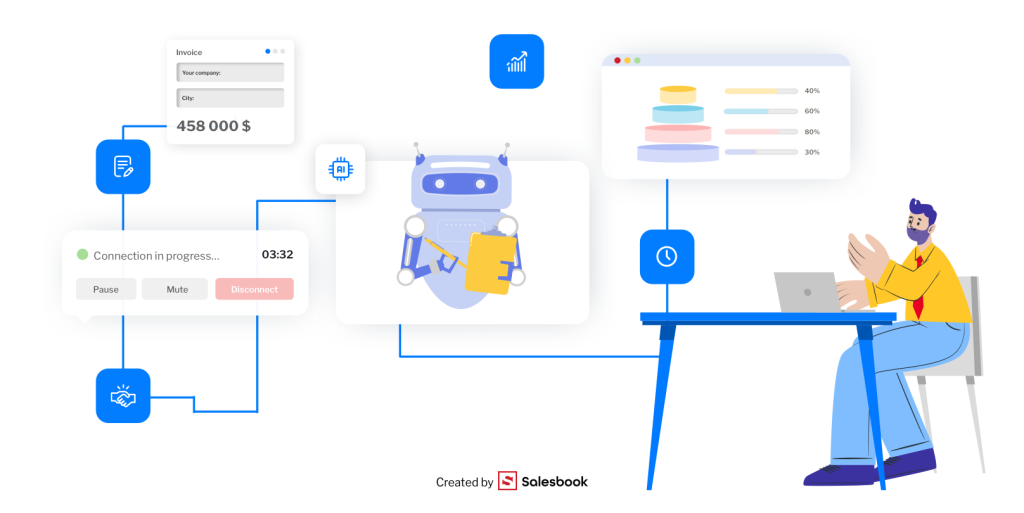
Models based on natural language processing can analyze documents, emails, and forms, and automatically populate CRM, ERP, or helpdesk systems. This delivers real time savings, especially in large operational teams.
What matters most is that automation integrates seamlessly with existing systems — the best AI solutions do not require replacing the entire technology stack.
2. Sales and marketing process automation
Marketing automation systems such as Salesbook, HubSpot, or Salesforce Pardot can:
- send personalized emails,
- segment audiences,
- run lead nurturing processes,
- analyze customer behavior.
All of this can operate in the background — forming the foundation of a modern marketing strategy.
3. Customer service and support
Modern AI chatbots and voicebots can handle 60–80% of standard customer inquiries when properly designed. Solutions based on natural language understanding are among the most mature AI technologies currently available for businesses.
4. Analysis of customer behavior and needs
Predictive models allow companies to analyze customer needs and anticipate what customers may require next. This is how recommendation engines at companies like Netflix or Amazon work, using machine learning techniques to identify patterns and preferences.
5. Automation of internal processes
In many organizations today, it is already possible to:
- automate document approval workflows,
- assign tasks automatically,
- trigger notifications,
- support employee onboarding.
With low-code platforms such as Power Automate, Make, or Zapier, automation possibilities are virtually unlimited.
What still cannot be sensibly automated?
1. Complex decisions requiring expert knowledge
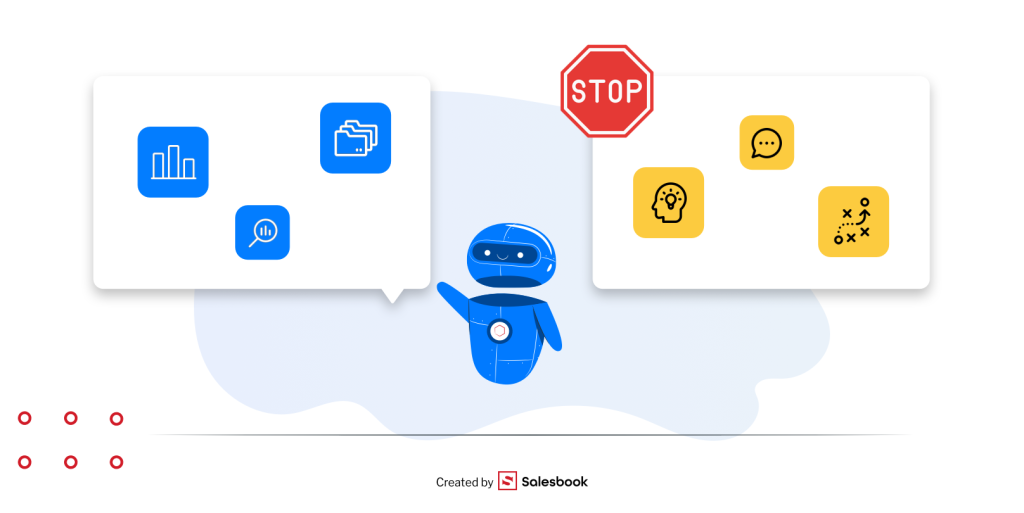
AI can analyze data, but it cannot replace specialists in areas such as law, medicine, security, or strategic management. These remain domains where humans stay in control, and AI serves only as a supporting tool.
2. Processes based on an individual, human-centered approach
AI can support customer interactions, but it cannot replace people in areas such as:
- conflict resolution,
- relationship building,
- sales negotiations.
3. Strategic creative decisions
New product planning, market entry, and business strategy design are areas where AI can support analysis and scenario building, but not act as the final decision maker.
4. Areas requiring deep intuition and experience
AI can analyze data and identify patterns, but it does not “sense” organizational context in the way an experienced leader does.
How to approach automation so that it truly makes sense?
- Choose the right AI tools — ones that integrate with your existing systems and support specific business processes.
- Start with a pilot project — limited scope, fast results, and easy evaluation.
- Automate where the business value is highest — process optimization should begin with the most costly or time-consuming areas.
- Scale gradually — effective automation grows together with the organization.
This approach ensures that AI becomes not a trend, but a measurable, controllable, and continuously improving operational advantage.
How to choose the right AI tools for your company?
Selecting the right technology is one of the most challenging stages of implementing AI. The market is full of promises and marketing slogans, and companies often invest in tools that fail to solve real problems. That is why the selection process should not start with vendor catalogs — but with your own business process.
1. Process first, technology second
Before reviewing solutions, ask yourself three questions:
- What problem do I want to solve?
- What does this process look like today?
- Which KPIs should the tool improve?
Companies that start with software often end up with tools no one uses. Those that start with a real problem choose more consciously and achieve faster results.
2. Prioritize integrations — tools should support work, not disrupt it
Effective AI solutions must integrate with existing systems such as CRM, ERP, ticketing platforms, analytics tools, and marketing systems.
Examples of tools known for strong integration ecosystems include:
- HubSpot AI — native analytics and content features, deep CRM integration.
- Microsoft Copilot — seamless collaboration with Office 365, Teams, SharePoint, and Power BI.
- Google Vertex AI — machine learning model development, automated pipelines, and integration with BigQuery.
- OpenAI API / Azure OpenAI — for building custom AI functions, chatbots, and document automation.
These solutions are real, commercially available, and used by global organizations — making them reliable reference points when planning AI implementation in a business environment.

3. Verify compliance with regulations and security policies
When selecting AI tools, companies must take into account:
- data location,
- encryption mechanisms,
- GDPR compliance,
- the ability to audit outputs and decisions.
This is especially critical for generative AI. Many companies (including Samsung, Apple, and Amazon) have introduced additional restrictions on sending data to generative AI models. These are real, well-documented cases and highlight the importance of data security and risk management in AI initiatives.
4. Always test before you buy
The most effective organizations start with a pilot project designed to answer three key questions:
- Does the tool improve KPIs?
- Is it intuitive for employees?
- Can it be scaled to additional business processes?
If a tool fails the pilot phase, it is not suitable for AI deployment — regardless of marketing promises.
AI implementation in sales and marketing — where does the fastest return on investment come from?
Sales and marketing are the areas where companies most often achieve fast and measurable ROI. This happens because AI can automate repetitive tasks, accelerate communication, improve the quality of analysis, and support sales teams exactly where time matters most.
1. AI in sales: supporting sales reps where speed is critical
Automatic analysis of notes and meetings
Microsoft Copilot, Salesbook, Zoom IQ, and Slack AI can automatically summarize customer conversations, generate next-step recommendations, and synchronize information with CRM systems.
Sales teams gain:
- less manual work,
- faster data entry,
- better contact prioritization.
This directly increases the amount of time spent on selling rather than administrative tasks.
Lead scoring powered by machine learning
Systems such as Salesbook, HubSpot, Salesforce Einstein, and Freshsales use machine learning algorithms to assess lead quality. AI analyzes dozens of factors, including contact history, user activity, website behavior, and email interactions.
The result:
- sales reps focus on leads with the highest potential,
- the process becomes more predictable and less dependent on human error.
2. AI in marketing: automation, personalization, analytics
Real-time communication personalization
AI can dynamically adjust content, recommendations, and offers based on:
- user behavior,
- purchase history,
- interactions in mobile channels,
- social media activity.
This is not theoretical — it is already being done by:
- Amazon (product recommendations),
- Netflix (predictive engines),
- Spotify (the Discovery algorithm).
Campaign automation and lead nurturing
Leading marketing automation platforms — HubSpot, Marketo, ActiveCampaign — enable automation of:
- audience segmentation,
- follow-ups,
- lead nurturing,
- response scoring,
- dynamic email sequences.
These are among the most mature AI solutions on the market, used commercially by companies for many years.
Content creation that supports the marketing process
AI does not replace marketers, but it:
- accelerates content creation,
- shortens research time,
- enables the generation of multiple text variations,
- suggests SEO optimizations.
The upside is clear time savings; the downside is the need for human quality control.
3. Shared benefits for sales and marketing
Better collaboration between teams
AI makes it possible to unify data, analyze the customer journey, and build a single, shared view of the customer that both sales and marketing teams can rely on.
Higher effectiveness through data analysis
AI helps analyze:
- which content performs best,
- which campaigns generate revenue,
- which activities influence final customer decisions.
This provides real support for business goals and forms the foundation for conscious pipeline management.
Faster sales funnel closure
Thanks to automated recommendations, better offer matching, and lead prioritization, the entire sales process accelerates.

Change management — how to prepare people for business process automation
Technology is only half the success. The other half — often the more difficult one — is people, their emotions, and how they respond to change. Many failures in AI implementation are not caused by technical issues, but by a lack of understanding of why the change is happening in the first place.
1. Communicate clearly what is changing and why
Teams need to understand why AI is being introduced, what benefits it will bring, and what it will not change. The most effective organizations follow one simple rule: no surprises.
A good message explains:
- what AI will do,
- when it will happen,
- how it will affect specific roles,
- what will remain under human control.
This is how Microsoft approaches the rollout of Copilot — through training sessions, Q&A materials, and clear explanations of the direction of change.
2. Show that AI does not take jobs — it changes how work is done
Employees often fear automation because they see it as a threat. That is why it is crucial to show concrete, real-life examples:
- AI removes manual data entry but increases time spent with customers.
- It automates reports but gives analysts more room to interpret results.
- It accelerates service processes, while final decisions remain with humans.
Companies such as IKEA and Volvo openly communicate that automation does not “replace” employees — it relieves them, allowing people to focus on higher-value work.
3. Invest in skills development — training, workshops, documentation
Effective AI implementation requires investment in education:
- tool-specific training,
- process-focused workshops,
- step-by-step tutorials,
- clear procedural guidelines.
This is the foundation of effective change management. When people understand how the technology works, they are far less afraid to use it.
4. Create the role of technology “ambassadors”
The most successful AI implementations in large organizations (such as Unilever, BMW, and Bosch) are built around so-called digital champions — individuals who test tools, explain them to others, and demonstrate their benefits.
This is a natural way to accelerate adoption and reduce resistance to change.
Risks and the most common mistakes in artificial intelligence implementation
Many companies begin AI implementation with great enthusiasm — but enthusiasm can be the most dangerous factor when it is not matched with a clear plan and awareness of risks.
1. Tool sprawl — implementing too much, too fast
One of the biggest risks is purchasing multiple AI tools at once. Without a clear AI strategy and prioritization, costs rise while actual usage drops.
Many companies made this mistake in 2023–2024, investing heavily in generative AI simply because competitors were doing so.
2. Lack of clear processes — AI does not work in chaos
If a process is disorganized, AI will not fix it — it may actually amplify existing errors.
Example: if a sales team does not maintain up-to-date data in the CRM, predictive models cannot generate accurate recommendations.
3. Poor data quality — the most common real-world problem
AI models rely on data. If the data is:
- outdated,
- fragmented,
- incomplete,
- incorrectly labeled,
then AI outputs will simply be unusable.
This is a recurring issue highlighted in numerous case studies published by Microsoft, Google, and AWS — all of which emphasize the importance of data readiness before scaling AI initiatives.
4. Lack of control and governance
Every use of artificial intelligence in a company requires:
- clear oversight procedures,
- access control,
- defined process owners,
- transparent rules for output validation.
AI cannot operate without humans in decision-making roles — especially in sales, customer service, and financial processes.
5. Underestimating ongoing costs
The purchase of technology is only the beginning. Implementation, integration, training, maintenance, updates, and data processing all generate real costs.
Companies that fail to account for these factors often abandon AI projects after just a few months.
How to measure the results of artificial intelligence implementation and scale solutions
The best companies do not just implement AI — they measure whether it works. This stage determines whether the use of AI translates into real business value.
1. Start with KPIs aligned with business goals
AI cannot operate in isolation from strategy. That is why KPIs must directly reflect business objectives, such as:
- reducing service handling time,
- increasing lead conversion rates,
- improving response times in customer service,
- reducing errors,
- increasing MRR/ARR through automation.
Only when the goal is clearly defined does AI implementation make sense.
2. Measure results using historical data
The most effective organizations compare performance “before and after” AI deployment.
Examples of metrics include:
- process completion time,
- number of errors,
- sales team efficiency,
- activity levels across the sales funnel.
These are objective, data-driven indicators — not subjective impressions.
3. Test on a small scale — then scale up
The best practice follows a simple model:
- pilot (limited scope),
- performance evaluation,
- adjustments,
- scaling across other departments.
This is exactly how companies such as Unilever, Siemens, Lufthansa, and Deloitte approach AI implementation — a method described in their publicly available official reports.
4. Use feedback from tool users
Employees are the best source of insight into whether AI is actually working. That is why feedback — including:
- UX-related feedback,
- process-level feedback,
- qualitative insights
— is essential for improving AI solutions over time.
5. Scale where AI delivers real value
AI scaling should focus on areas where:
- processes are stable,
- data quality is high,
- AI genuinely speeds up work,
- there is clear potential for cost savings or business growth.
Only then can an organization speak about mature AI adoption and readiness to expand AI solutions across additional departments.
Summary
AI implementation is not a “technology project” — it is a transformation of how the entire organization works. For AI in a company to truly deliver results, you must start with processes, data, and people — and only then move to technology. The key is conscious planning, small pilot projects, measuring outcomes, and gradual scaling. Artificial intelligence offers enormous opportunities: it automates repetitive tasks, improves business process efficiency, and enhances the quality of decision making. But its success depends on one thing — whether it becomes part of the company’s strategy, not just another tool.
FAQ
1. Where should you start AI implementation in a company?
AI implementation should always start with a clear AI implementation strategy, not with tools. The first step is to understand your business processes, define objectives, and assess whether your organization has the right data collection practices in place. Without reliable training data, even the most advanced AI systems will fail to deliver value.
At this stage, companies should involve data scientists, business owners, and — when needed — AI engineers to evaluate data readiness, model feasibility, and risks. This includes verifying whether you have access to fresh data, historical data, and relevant data sources that support model training.
Organizations should also decide whether they rely on traditional AI (rule-based systems) or more advanced approaches such as deep learning, artificial neural networks, or a deep neural network, depending on the use case. Solid preparation significantly increases the chances of successful AI implementation.
2. Which processes are the easiest to automate with AI?
Processes that rely on large volumes of structured or semi-structured data and repetitive workflows are the easiest to automate. Common examples include data entry, customer service, document processing, lead scoring, reporting, and basic fraud detection.
These use cases typically benefit from machine learning, deep learning, and AI agents that can operate autonomously within defined rules. Many companies start with generative AI tools for text analysis, summarization, and classification, gradually expanding toward more complex AI programs.
The key is to automate where AI’s processing capabilities clearly outperform manual work — while keeping humans involved in supervision and exception handling.
3. How long does artificial intelligence implementation take?
The timeline depends on complexity. A small pilot using cloud-based AI tools and managed cloud services can take as little as 4–8 weeks. These pilots usually test a single process, validate model performance, and assess user adoption.
Larger AI initiatives — especially those involving generative AI adoption, custom model training, or integration across multiple business operations — typically take several months. This includes data preparation, testing, security validation, and iterative improvement.
Companies that invest early in data quality, AI research, and internal competencies scale significantly faster over time.
4. Will AI replace employees?
No. AI changes how people work rather than replacing them. Automation removes repetitive tasks, but decision-making, creativity, and accountability remain human responsibilities. This shift mirrors human learning — AI supports learning patterns, while people provide judgment and context.
Roles evolve: analysts work alongside models, sales teams use AI recommendations, and managers rely on data-driven insights. In many organizations, AI adoption actually increases demand for skilled roles such as AI researchers, data scientists, and process owners who translate insights into action.
5. How do you measure whether AI delivers results?
Effectiveness should be measured using KPIs tied to business outcomes: efficiency, revenue impact, cost reduction, and risk mitigation. Examples include faster response times, fewer errors, improved conversion rates, or better fraud detection accuracy.
From a technical perspective, companies should monitor model performance, data drift, and system reliability. This includes evaluating whether models still perform well as data changes and whether fresh data is consistently fed into the system.
Continuous measurement ensures AI delivers long-term business value, not just short-term wins.
6. How should companies handle data security and ethics when implementing AI?
Any AI initiative must prioritize ensuring data security, especially when working with sensitive data such as customer information, financial records, or personal identifiers. This includes encryption, access controls, compliance with regulations, and strong network security practices.
Equally important is AI ethics. Companies should define rules for transparency, bias monitoring, and accountability. Before deployment, organizations should conduct thorough risk assessments to understand potential legal, operational, and reputational risks.
Ethical AI implementation is no longer optional — it is a core requirement for sustainable AI adoption.
7. Do companies need in-house AI teams to succeed?
Not always. Many organizations successfully start with external partners or cloud-based platforms. However, having internal expertise — even a small group of AI engineers, data scientists, or analytics leads — greatly improves decision-making and governance.
Internal teams help bridge the gap between AI research, business needs, and operational execution. Over time, this internal capability becomes a competitive advantage, enabling companies to build custom solutions, deploy AI agents, and adapt models faster than competitors.
Table of Contents