 EN
EN  PL
PL  DE
DE 


Sales Forecast – What It Is and How to Calculate It


You run a company, and your sales team asks: “How much should we sell next quarter?” Without solid data, your answer will be based purely on intuition. And while intuition sometimes hits the mark, in business it rarely creates a competitive advantage. This is exactly where the sales forecast comes into play — a tool that turns numbers, market trends, and customer behavior into actionable strategic decisions.
A well-prepared sales forecast isn’t guesswork. It’s a data-driven process that uses historical sales data, market research, and statistical models to predict future sales with a high degree of accuracy. Thanks to these sales forecasts, managers know how to allocate budgets, how many people to hire, what sales quotas to set, and when it’s the right time to enter a new market.
Why the Sales Forecast Is the Foundation of Every Business
An accurate sales forecast brings order to your budget, recruitment, and campaign planning — and helps you respond faster to shifts in market trends. It transforms your sales pipeline into a clear action plan: you know how much sales revenue will likely come in, what resources to secure, and which channels to strengthen.
Here’s what you can do today to start building a reliable sales forecasting process:
- Define the forecasting horizon and granularity — monthly or quarterly, by product or segment.
- Choose your sales forecasting methods, such as regression or moving averages, and establish validation criteria.
- Identify key drivers: seasonality, pricing, channel performance, CRM data signals, and changing customer behavior.
- Set the rhythm — update your sales forecasts regularly (weekly or monthly) depending on market conditions.
- Review deviations using metrics such as MAPE, WAPE, or bias, and plan corrective actions.
Make sure to leverage CRM data — integrating your sales pipeline and past sales data simplifies the operational side of sales forecasting.

What Is a Sales Forecast?
A sales forecast is a numerical estimate of future sales — expressed in revenue or units — based on an analysis of historical sales data, shifts in market trends, and observations of customer behavior.
In practice, it combines a top-down view (market and macro data) with a bottom-up perspective (your CRM pipeline) while selecting the right sales forecasting methods depending on sales volume and volatility.
For products with stable demand, time series forecasting methods often deliver the most accurate forecasts. For new offerings, scenario-based approaches work better — those built on acquisition parameters, pricing tests, and early customer demand indicators such as sign-ups, leads, or pre-orders. It’s still sales forecasting, but based on early-stage demand signals.
It’s essential to clearly define what “confidence” in a forecast means and how accuracy is measured. Establish forecast accuracy metrics, iterate your model, and document assumptions. This kind of forecasting “manual” structures the entire sales forecasting process, improves transparency, and helps communicate effectively with finance or marketing teams.
If your business sells both products and services, create separate metrics and update schedules for each stream. For sales teams just starting with forecasting, it’s best to begin with a short list of forecasting methods (two or three techniques) and expand gradually as data maturity grows.
Why Is Sales Forecasting So Important?
Because it influences your decisions on budgeting, marketing, and operations — before the market reveals the results. Effective sales forecasting aligns your sales goals with real customer demand, synchronizes campaigns with market trends and seasonality, and optimizes inventory levels and production capacity.
Key Benefits of Accurate Sales Forecasting
- Campaign planning based on demand indicators such as lead velocity, conversion rates, and customer behavior signals.
- Faster strategic decisions — entering or exiting a segment, or adjusting product sales when market conditions shift.
- Goal alignment across departments — sales, marketing, and finance all operate under a unified sales forecast scenario.
- Risk control through scenario planning — best/base/worst cases with clearly defined thresholds that trigger corrective actions.
How to Work with Forecasts Daily
- Report forecast accuracy and bias by segment or product; share deviations and insights transparently.
- Build forecasts from your sales pipeline (stage-weighted) but validate them using demand data such as demo requests or inquiries.
- Plan forecasting cycles as part of your company’s strategic planning and link them to quarterly business goals.
- Treat your forecasting methods like a product — iterate, validate, and compare model versions to improve forecast accuracy.
You can find ready-to-use templates and sales performance metrics here: Sales Metrics.
Want to see how it all connects — from pipeline to forecast to offer? Book a free live demo of Salesbook to experience how automated forecasting simplifies decision-making.

The Role of Data Analysis in Sales Forecasting
There’s no effective sales forecast without numbers. Data analysis is what separates intuition from hard evidence. Companies that maintain well-structured historical sales data can uncover past sales patterns, then compare them with current market trends and evolving customer preferences.
Techniques like regression analysis and other statistical models help identify which factors most influence sales performance — price, seasonality, distribution channels, or marketing intensity. These methods form the backbone of both traditional sales forecasting methods and modern, AI-driven forecasting models.
Organizations that use advanced sales forecasting software — such as CRMs with forecasting modules, BI dashboards, or machine learning tools — achieve higher forecast accuracy and gain a measurable competitive edge. That’s why more and more sales leaders treat sales forecasting not as a supporting report, but as a strategic component of business planning.
Platforms like Salesbook strengthen this approach by integrating sales pipeline data, sales representatives’ activities, and campaign results — delivering a unified, data-driven view of the market.
How to Calculate a Sales Forecast Step by Step
Calculating a sales forecast is a structured process that combines data analysis, market insights, and business judgment. Here’s how to build a reliable model for predicting future sales:
- Gather historical data — at least 12–24 months to capture seasonal fluctuations and long-term trend analysis.
- Consider market conditions — inflation, regulatory changes, and competitor behavior all impact sales revenue.
- Select your forecasting method — such as moving averages, regression analysis, or expert-based estimates.
- Build multiple scenarios — optimistic, base, and pessimistic forecasts for better risk management.
- Validate forecast accuracy — compare your estimates with actual results from previous months to identify bias.
- Establish a review cycle — regularly update your models as real-time data and market trends evolve.
By definition, a sales forecast is an estimate subject to error — which is why it’s crucial to measure forecast accuracy and continuously refine your models.
A good practice is to combine multiple approaches — for example, blending historical sales data with insights from your sales team — to improve the precision of predicting future sales.
From a sales leader’s perspective, a well-structured sales forecasting process not only simplifies financial planning but also helps set realistic sales quotas and shape more effective sales strategies.
Sales Forecasting Methods – Which Approaches Do Companies Use?
There’s no single, universal path to an accurate sales forecast. Organizations apply different forecasting methods depending on their industry, market dynamics, and data availability. The most common sales forecasting methods can be divided into two main categories:
- Quantitative methods — based on historical data, such as moving averages, trend analysis, and regression analysis. These work best in stable markets with consistent sales volumes and a large amount of past sales data.
- Qualitative methods — built on expert opinions, surveys, market research, and observations of customer preferences. These are particularly useful when launching new products or when historical forecasting data is incomplete.
More and more companies are adopting hybrid models that combine both approaches. Blending quantitative forecasting with expert insights improves forecast accuracy and helps businesses prepare for different future sales scenarios.
From a practical perspective, the key is to match your forecasting method to your business context — and to experiment with new techniques as market conditions evolve.
For a deeper look into how tools support this process, see our article: What Is Sales Analytics?
Sales Forecasting Methods Based on Historical Data
One of the most common business practices is sales forecasting based on historical data. By analyzing past sales data — including revenue, orders, and leads — companies can identify seasonal fluctuations, recurring patterns, and customer reactions to specific marketing actions. This provides a strong foundation for planning future sales results.
Typical techniques include trend analysis and moving averages, which smooth out short-term variations and reveal long-term growth direction. These models can also incorporate external factors such as inflation, regulatory changes, or interest rate shifts that influence purchasing power and customer demand.
Organizations that rely on historical sales data not only achieve more accurate sales forecasts, but also optimize campaign scheduling, budgeting, and the setting of sales targets. However, it’s important to remember that economic shifts or sudden changes in customer preferences can disrupt even the most reliable historical forecasting models if they rely solely on past data.
Quantitative Methods – Numbers, Statistics, and Mathematics
Quantitative forecasting methods rely on hard data and remain the most objective way to create accurate sales forecasts. They include techniques such as moving averages, exponential smoothing, and time series trend analysis. Each of these data-driven approaches helps identify patterns within the sales process and translate them into forecasted sales for upcoming periods.
One of the most widely used techniques is linear regression, which analyzes the relationship between variables — for example, how the advertising budget impacts sales revenue. In more advanced models, companies apply multiple regression to account for several variables simultaneously, including seasonal fluctuations, pricing, and external factors.
Quantitative forecasting works best in stable business environments and when sufficient historical sales data is available. Under these conditions, it enables sales leaders to plan confidently, making decisions based on measurable insights rather than assumptions — ensuring accurate forecasting and more predictable sales performance.
Qualitative Methods – Expert Knowledge and Market Research
When rich datasets are unavailable or the market is rapidly changing, qualitative forecasting methods come into play. These approaches rely on the expertise and intuition of the sales team, combined with structured market research and customer insights.
Common Examples of Qualitative Forecasting:
- Expert panels – gathering opinions from specialists who evaluate future sales performance based on their experience and market observations.
- Delphi method – a multi-round survey where experts review and refine their sales forecasts until reaching a consensus.
- Consumer surveys – analyzing customer declarations about upcoming purchases to detect shifts in customer preferences.
- Market research reports – conducted by specialized firms to assess competition, new products, and changing external factors.
Qualitative forecasting is especially valuable when launching new products, where no historical data exists yet. It helps assess risks, define realistic sales targets, and adjust sales strategies to changing market conditions.
In practice, the best results come from combining quantitative and qualitative methods. Numbers bring structure and precision, while market research and team experience provide context. Together, they give sales leaders more reliable and adaptable sales forecasts.
Regression Analysis in Sales Forecasting
Regression analysis is one of the most commonly used statistical techniques in business. It helps determine how variables such as price, marketing spend, or the number of sales representatives influence sales performance. Instead of relying on guesses, companies can use regression models to create accurate, data-driven sales forecasts.
In practice, linear regression identifies relationships between historical data and sales outcomes, while multiple regression accounts for several variables simultaneously — including seasonality, pricing, and marketing effectiveness. This approach is especially useful for predicting future sales, as it allows organizations to anticipate how multiple factors interact and affect sales revenue.
Regular use of regression analysis provides a tangible competitive advantage. It enables faster reaction to market changes, improves forecast accuracy, and supports better-informed decisions about budgets, campaigns, and sales strategies.
Market Research and the Accuracy of Sales Forecasts
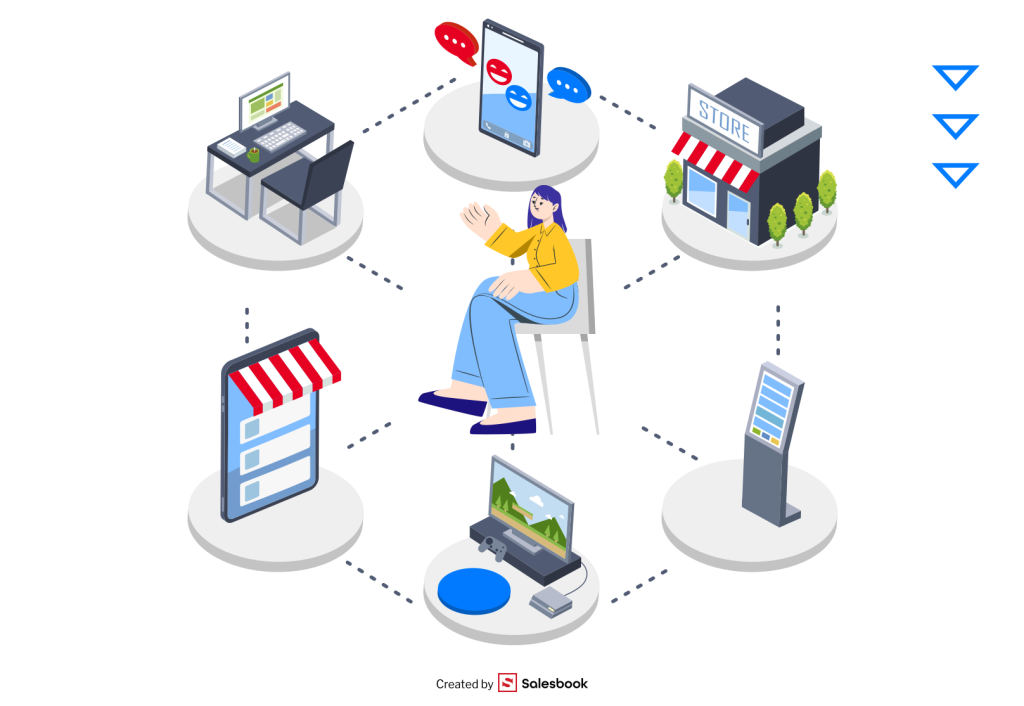
No sales forecast is complete if it relies solely on numbers. Market research helps uncover customer motivations — the “why” behind the data — providing context that spreadsheets alone can’t show. Surveys, focus groups, and interviews enrich quantitative data by revealing how customer expectations evolve over time.
Combining market data and research insights with statistical forecasting models significantly improves forecast accuracy and enables faster responses to emerging market trends.
For example, analyzing consumers’ purchase intentions before the holiday season allows businesses to predict future sales and anticipate demand shifts for specific products.
Market research is also crucial when launching new products, where historical sales data is limited or unavailable. In such cases, customer opinions and behavioral insights help build realistic sales projections and plan effective marketing campaigns.
Sales Forecasting and the Product Life Cycle
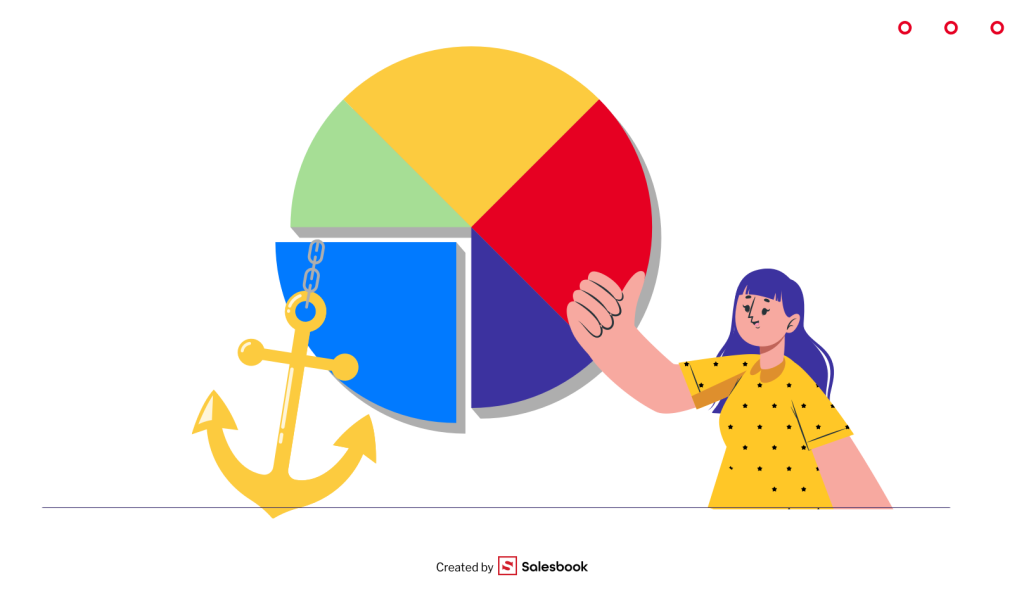
Every product goes through four stages: introduction, growth, maturity, and decline — and each stage requires a different sales forecasting method.
At the introduction stage, when historical data is limited, it’s best to rely on market research and expert-based forecasts. During the growth phase, trend analysis becomes crucial to capture the pace of expansion and identify leading market trends.
In the maturity stage, forecasting relies primarily on historical sales data and indicators of stable customer demand, while in the decline phase, monitoring market conditions and early warning signals helps estimate how quickly the product will phase out.
Understanding the product life cycle enables more accurate forecasting of future sales across the entire portfolio and helps allocate resources more effectively between segments. This makes forecasting not only a tool for sales teams, but also for finance and marketing departments striving for accurate sales planning and smarter resource allocation.
External Factors in Sales Forecasting – Macroeconomics and Market Trends
Even the most sophisticated sales forecasting model can fail if it ignores what’s happening in the wider market. Inflation, currency fluctuations, monetary policy, and technological change are all external factors that significantly shape customer demand and sales performance.
That’s why every sales forecast should include an analysis of economic and industry trends. Advanced forecasting tools integrate external market signals with internal performance data, increasing forecast accuracy and helping organizations make more informed decisions.
Incorporating macroeconomic indicators into the sales forecasting process reduces risk and provides a real competitive advantage. Companies that embed market data into their models are better prepared for market volatility and can adapt their sales strategies faster to shifting market conditions.
CRM as a Tool for Forecasting Future Sales
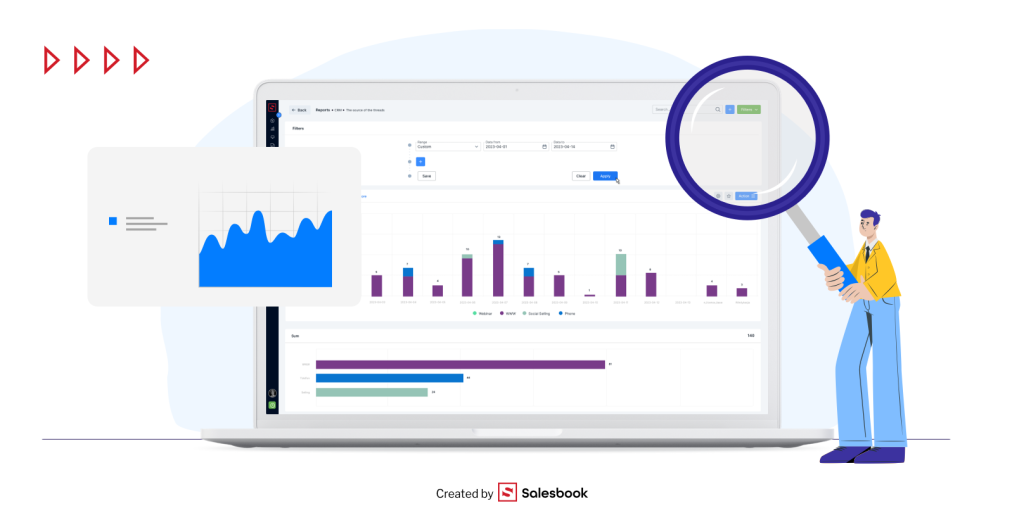
A CRM system is no longer just a contact database — it’s a command center that increasingly serves as a primary tool for forecasting future sales. By integrating the sales pipeline, historical sales data, and sales representatives’ activities, CRM provides a unified view of opportunities and identifies which ones are most likely to convert into sales revenue.
The greatest value of CRM lies in automation. Data is collected in real time, and the system continuously updates forecasted sales, eliminating spreadsheet chaos and enabling direct comparison between team forecasts and actual results. Sales leaders gain clear visibility into which opportunities require support and which can already be considered reliable wins.
Salesbook takes this even further — beyond traditional CRM functions. It offers advanced sales analytics, AI-driven insights, and integrated sales forecasting software that not only visualizes the current sales pipeline but also recommends actions to improve conversion probability.
Learn more: CRM and Analytics
How Sales Forecasting Supports Marketing and Advertising Campaigns
Marketing and sales often operate at different speeds — but sales forecasting can bridge that gap. Accurate sales forecasts give marketing teams the insights they need to plan budgets, synchronize campaigns with seasonal trends, and tailor messaging to real market demand.
For example, if the forecasted sales indicate a drop in demand during the summer months, the marketing team can proactively prepare promotions to fill the gap. Conversely, when future sales are expected to peak, campaigns can focus on brand awareness and lead generation to maximize potential revenue.
By aligning marketing activities with sales forecasts, organizations achieve more precision and synergy between departments. It’s not just about saving the budget — it’s about running smarter, better-timed, and more effective campaigns.
In practice, this alignment works best when both teams operate within one integrated system — such as Salesbook, which connects sales forecasting, sales analytics, and marketing insights in a single platform.
Automated Sales Forecasting – Saving Time and Increasing Accuracy
Automation brings together data collection, forecast generation, and updates into one unified system. Instead of manually transferring figures from spreadsheets into reports, a CRM platform automatically gathers all relevant sales data and generates an up-to-date sales forecast.
This saves teams dozens of working hours while reducing the risk of human error to almost zero. Automation also enhances forecast accuracy, eliminating issues caused by data delays or outdated inputs.
In Salesbook, automated sales forecasting is available within the analytics module. Data is refreshed in real time, and sales leaders gain not only numerical forecasts but also actionable recommendations that help increase the likelihood of meeting — or exceeding — sales targets.
The Most Common Sales Forecasting Mistakes and How to Avoid Them
Even the most advanced sales forecasting process can fail if certain fundamentals are ignored. Below are the most frequent mistakes companies make — and practical ways to prevent them.
- Lack of data or poor data quality – forecasts based on incomplete or outdated sales data lead to inaccurate conclusions.
Solution: maintain an organized CRM system and integrate it with other tools to ensure consistent, real-time information flow. - Excessive optimism – salespeople often overestimate results.
Solution: use weighted pipeline forecasting, assigning realistic probabilities to each opportunity stage to generate a more accurate sales forecast. - Ignoring external factors – crises, regulatory changes, or new technologies can dramatically influence sales performance.
Solution: incorporate macroeconomic data and monitor market trends regularly to ensure your model reflects current market conditions. - Lack of regular updates – a forecast built once per quarter quickly becomes outdated.
Solution: update forecasts cyclically and treat it as a living process tied to your sales cycle and business rhythm. - Relying on a single method – no single forecasting method is universally reliable.
Solution: combine quantitative and qualitative forecasting approaches for a more balanced and accurate forecasting model.
How to Connect Sales Forecasting with Budgeting
Sales forecasting and budgeting are two communicating vessels. Forecasts indicate the revenue a company can expect over a given period, while the budget defines how those funds will be allocated. Without an accurate sales forecast, realistic financial planning simply isn’t possible.
The best practice is to build your budget around multiple sales forecast scenarios — base, pessimistic, and optimistic. This approach helps businesses stay agile, adapt quickly to changing market conditions, and make more informed decisions when adjustments are needed.
In platforms like Salesbook, forecasts can be directly linked to contract planning and sales performance tracking, allowing managers to translate projected numbers into actionable business strategies and ensure consistent alignment between forecasting, budgeting, and execution.
KPI Metrics for Measuring Forecast Accuracy
Creating a sales forecast is only half the job — verifying it is what truly matters. The following key performance indicators (KPIs) are essential for monitoring the accuracy of sales forecasts:
- Forecast accuracy – measures the deviation between forecasted and actual sales, most commonly tracked using MAPE (Mean Absolute Percentage Error) or WAPE (Weighted Absolute Percentage Error).
- Forecast bias – indicates whether forecasts consistently overestimate or underestimate sales performance.
- Forecast conversion – shows what percentage of forecasted opportunities actually resulted in closed deals.
- Target attainment – compares forecasted results with established sales quotas and business objectives.
Tracking these indicators allows organizations to evaluate the quality of their forecasting models, identify recurring patterns, and continuously improve forecast accuracy over time.
For a detailed discussion of sales metrics and best practices, see: Sales Performance Metrics – Key Indicators.
How Often Should You Update Your Sales Forecast?
A sales forecast isn’t a document you create once a year and forget about. Its real power lies in timely updates. The more dynamic your market conditions, the more frequently your forecast should be revised. Common standards include:
- Monthly updates – when sales are stable and predictable.
- Quarterly updates – for longer B2B sales cycles and strategic planning.
- Weekly adjustments – in fast-moving sectors such as retail or e-commerce, where sales cycles are short and customer demand changes rapidly.
With this approach, your forecast continuously reflects the actual state of the sales pipeline and the market, enabling faster reactions to change. The best results come from automation — a CRM system that updates forecasts in real time significantly reduces the risk of errors and ensures decisions are always based on accurate sales data.
Sales Forecasting and New Market Expansion
Expansion always comes with uncertainty — and that’s where a sales forecast becomes a powerful risk-management tool. When analyzing the potential of a new market, companies should examine:
- the size and growth rate of customer demand,
- competition and pricing strategies,
- local customer preferences,
- and legal or regulatory factors.
By combining these insights with historical sales data from existing markets, organizations can build realistic sales forecasting scenarios for market entry. Such forecasts help determine whether expansion will be profitable, what budgets should be allocated for launch, and what sales revenue targets are achievable within the first 12–24 months.
In practice, Salesbook supports this process — its CRM and analytics tools allow teams to filter pipeline data by region or segment, making it easier to assess potential and simulate future sales before entering a new market.

Tools Supporting Data Analysis in Sales Forecasting
While Excel can handle basic forecasting, it quickly becomes unsustainable as data volume and complexity grow. Modern organizations rely on integrated, intelligent systems that combine automation, analytics, and visualization. The most effective solutions include:
- CRMs with built-in forecasting modules – such as Salesbook CRM, which integrates sales data, sales representatives’ activities, and the sales pipeline into one centralized platform.
- Business Intelligence (BI) dashboards – tools like Power BI, Tableau, or Google Data Studio that enable trend analysis, visualization, and performance tracking.
- Advanced analytical tools – machine learning algorithms and real-time predictive analytics that automatically adjust forecasts as new data arrives.
- Marketing–sales integrations – platforms that combine campaign data with sales results to improve alignment and forecast accuracy.
The key is to choose tools that not only generate numbers but also empower decision-making — showing sales leaders which actions will improve results and where potential risks may emerge within the sales pipeline.
Sales Forecasting as the Strategic Compass of a Company
A sales forecast is more than just a spreadsheet full of numbers — it’s a strategic compass that guides the company through changing market conditions. It enables leaders to not only predict future sales and revenue but also to set realistic sales targets, plan budgets, and align marketing and sales initiatives for maximum impact.
Organizations that treat forecasting as a foundation for strategic planning gain both stability and a competitive advantage. The key condition, however, is reliability — your sales data must be accurate, and your forecasting process must be continuously updated.
If you want to see what modern, data-driven forecasting looks like in practice, book a free live demo of Salesbook and discover how our tools support not only daily sales operations but also long-term strategic growth.
FAQ – Frequently Asked Questions About Sales Forecasting
1. What is a sales forecast?
A sales forecast is a data-driven estimation of future sales and future revenue, built using historical sales data, industry data, customer data, and both internal and external factors that influence sales performance. It helps companies make accurate predictions about future results and improve their overall sales team performance.
2. Why is sales forecasting important?
Because it allows organizations to make informed decisions, manage budgets, and align sales cycles with future sales trends. Accurate forecasting also supports resource allocation, sales team efficiency, and proactive planning against sales forecasting challenges like market volatility or inconsistent data quality.
3. How do you calculate a sales forecast?
To calculate a sales forecast, analyze past performance and past sales data, evaluate your sales pipeline by opportunity stage forecasting, and apply appropriate forecasting methods. Many sales organizations rely on sales software like Salesbook, which automates this process and delivers valuable insights into every sales period.
4. What are the common sales forecasting challenges?
Among the most common sales forecasting challenges are inaccurate or missing data, poor visibility into customer interactions, lack of documented sales processes, and failure to consider future trends. These issues often result in low forecast accuracy and unrealistic sales projections.
5. What are the best solutions for improving forecast accuracy?
Implementing a sales forecasting solution such as a modern CRM or analytics platform helps unify customer feedback, market data, and sales analytics in real time. Tools like Salesbook CRM integrate sales cycle forecasting, average deal size, and sales reps performance metrics — providing valuable insights for sales leaders and enabling teams to predict future trends more precisely.
6. Which tools support accurate sales forecasting?
Modern sales software combines AI-based forecasting, predictive analytics, and automation. A solution like Salesbook helps track every sales rep’s activity, calculate sales forecast, analyze opportunity stage forecasting, and deliver accurate predictions for upcoming quarters. These tools turn complex sales data into actionable, easy-to-understand insights that strengthen both operational execution and long-term strategy.
Table of Contents